

What is back pain?
Back pain is discomfort in the lower, mid or upper spine and the muscles that support it. It is one of the most common reasons people stop sitting, lifting or sleeping well. Most day-to-day back pain is mechanical — linked to how you load, bend, twist and recover — not always a “slipped disc” on a scan.
Why does this problem happen?
Your spine shares load with hips, core and shoulders. When one area is stiff or weak, another works overtime. Long sitting, sudden lifts, weak hip endurance, stress and poor sleep all raise sensitivity in the back. Pain is real — and it often improves when load and movement are guided properly.

What kinds of back pain can occur?
Not every case feels the same. These are common patterns we see in clinic and home visits across Delhi NCR:
Acute back pain
Pain lasting less than six weeks — usually from muscle strain, lifting heavy objects, or a sudden awkward movement.
Chronic back pain
Pain lasting more than three months, often linked with arthritis, disc degeneration, spinal instability or long-term poor posture.
Mechanical back pain
Pain arising from muscles, ligaments, joints or discs — the most common type physiotherapists treat.
Radicular back pain
Occurs when a spinal nerve is compressed, sending pain into the buttock or leg — commonly seen in sciatica.
Inflammatory back pain
Associated with conditions such as ankylosing spondylitis; often brings morning stiffness that improves with movement rather than rest.
Common causes & triggers
These are frequent reasons back pain starts or keeps returning:
- Prolonged sitting or poor desk setup (rounded or collapsed posture)
- Sudden lifting, twisting or awkward bending under load
- Weak or under-used hip and deep core muscles
- Sudden return to gym/training after a long break
- Sleep position or mattress that keeps the spine stressed overnight
- Stress and fatigue that increase muscle guarding
- Previous sprain that never fully rebuilt capacity
Poor posture
Slouched sitting and standing increase load on spinal ligaments and discs over time, gradually sensitising the back.
Prolonged desk work
Long unbroken sitting reduces disc nutrition and muscle endurance, making the spine less tolerant of sudden demands.
Heavy lifting
Lifting with a rounded back or twisting under load places uneven stress on discs and joints, a common trigger for acute strain.
Weak core muscles
The deep abdominal and back muscles act as a natural corset; when they under-perform, the spine absorbs more load than it should.
Obesity
Extra body weight increases compressive load on the lumbar spine and can accelerate disc and joint wear over years.
Pregnancy
Shifting posture, ligament laxity and a growing front load change how the spine and pelvis share stress during pregnancy.
Muscle strain
Sudden or repetitive overload of back muscles causes micro-tearing and localised pain, usually the most benign and self-limiting cause.
Disc bulge
Changes in disc shape can irritate nearby tissue or nerve roots, producing central or radiating pain depending on location.
Arthritis
Degenerative changes in spinal facet joints reduce comfortable range and can cause stiffness-dominant pain, especially with age.
Osteoporosis
Reduced bone density raises the risk of vertebral compression, particularly in older adults after even minor falls or strain.
Sports injuries
High-load or twisting sports movements can strain spinal structures, especially without adequate core and hip strength.
Age-related degeneration
Natural disc and joint changes over decades can reduce shock absorption, making the spine more reactive to unaccustomed load.
Risk factors — who is more at risk?
These factors don’t guarantee back pain, but they raise the odds and are worth addressing alongside treatment:
- Sedentary lifestyle with little regular movement
- Lack of structured exercise or conditioning
- Smoking, which reduces disc blood supply
- High stress levels increasing muscle guarding
- Excess body weight
- Improper lifting techniques at work or home
- Long driving hours with poor seat support
- Repetitive bending or twisting at work
- Poor ergonomics at a desk or workstation

Recognise your pattern? A clear assessment is faster than guessing exercises from the internet.
Call +91 79002 56729 WhatsApp usSigns & symptoms
- Aching or sharp pain in the lower or mid back
- Stiffness after sitting or first thing in the morning
- Pain when bending, lifting or standing long
- Pain that eases with movement but returns with load
Dull aching pain
A constant, low-grade ache is the most common presentation of mechanical back pain. It usually builds through the day with sitting or standing and eases somewhat with position changes.
Sharp stabbing pain
Sudden, sharp pain — often after a lift or twist — points to an acute strain or joint irritation. It may briefly take your breath away before settling to a dull ache.
Morning stiffness
Stiffness on waking that loosens within 20–30 minutes of movement is typical of mechanical back pain; stiffness lasting much longer can suggest an inflammatory pattern worth discussing with your physiotherapist.
Muscle spasms
Protective muscle spasm is the body’s way of guarding an irritable area. It can feel alarming but is rarely dangerous — gentle movement and guided relaxation usually help more than complete rest.
Difficulty standing
Struggling to fully straighten up after bending or sitting is common in acute flares and usually eases within the first few days as irritability settles.
Pain while bending
Forward bending loads the front of the spine and discs; pain here often responds well to guided extension-based exercises and load management.
Pain after prolonged sitting
Desk workers frequently notice pain building after 30–60 minutes of sitting — a sign that postural endurance and movement breaks need attention.
Pain while lifting
Pain triggered specifically by lifting suggests the spine needs better hip-driven lifting mechanics and stronger supporting muscles, not simply avoidance of all lifting forever.
Pain radiating to the legs
When pain travels from the back into the buttock or leg, a nerve-related (radicular) pattern such as sciatica may be involved and needs careful assessment.
Numbness and tingling
Pins-and-needles or numbness in the leg or foot can accompany nerve irritation and should be assessed rather than ignored, especially if it is spreading.
Weakness in the legs
New or progressive weakness — such as a foot that drags or a knee that gives way — is a more significant sign that needs prompt clinical assessment.
Difficulty sleeping
Pain that disturbs sleep is common in both acute and chronic back pain and is one of the clearest signs that treatment, not just waiting, is needed.
When should you see a physiotherapist?
If pain lasts more than a few days, limits work or sleep, or follows a lift/twist — get assessed. Seek urgent medical care for unexplained weight loss, fever, progressive weakness, bowel/bladder changes or trauma.
Seek urgent medical attention for bowel/bladder changes, rapidly worsening weakness, unexplained weight loss, fever, or symptoms following major trauma — these are emergency signs, not routine physiotherapy concerns.
How physiotherapy helps
We map aggravating movements, calm irritable segments, restore mobility and rebuild hip/core endurance so your back tolerates real life again — not just the clinic floor.
- Pain reduction: Hands-on therapy, guided movement and, when appropriate, modalities calm irritable tissue so you can move sooner rather than waiting it out.
- Restoring mobility: Graded mobility work returns comfortable bending, twisting and reaching without provoking a flare.
- Muscle strengthening: Targeted core, hip and back strengthening rebuilds the support your spine relies on for daily tasks.
- Improving flexibility: Better hip and thoracic flexibility takes pressure off an overworked lower back.
- Core stabilisation: Deep trunk control is trained functionally — during walking, lifting and sitting — not just in isolated crunches.
- Balance training: Especially relevant for older adults, balance work protects against falls that could otherwise injure the spine further.
- Functional rehabilitation: Exercises are progressed toward your real tasks — lifting your child, gardening, gym training or long work shifts.
- Posture correction: We correct the habitual positions that quietly reload your back all day, at the desk, in the car and at home.
- Ergonomic advice: Simple, practical changes to your chair, screen height and lifting habits reduce daily strain.
- Prevention of recurrence: A graduated return-to-activity plan and home programme are designed specifically to reduce the chance of your back pain coming back.
Treatments we may use for back pain
Based on your assessment, your plan may include one or more of these physiotherapy treatments:




Treatments we offer for back pain
Quick Physio does not run a one-modality clinic. After assessment, your plan for back pain may combine several of these treatments — chosen for your irritability, goals and whether you are seen at home or in our Ghaziabad clinics.
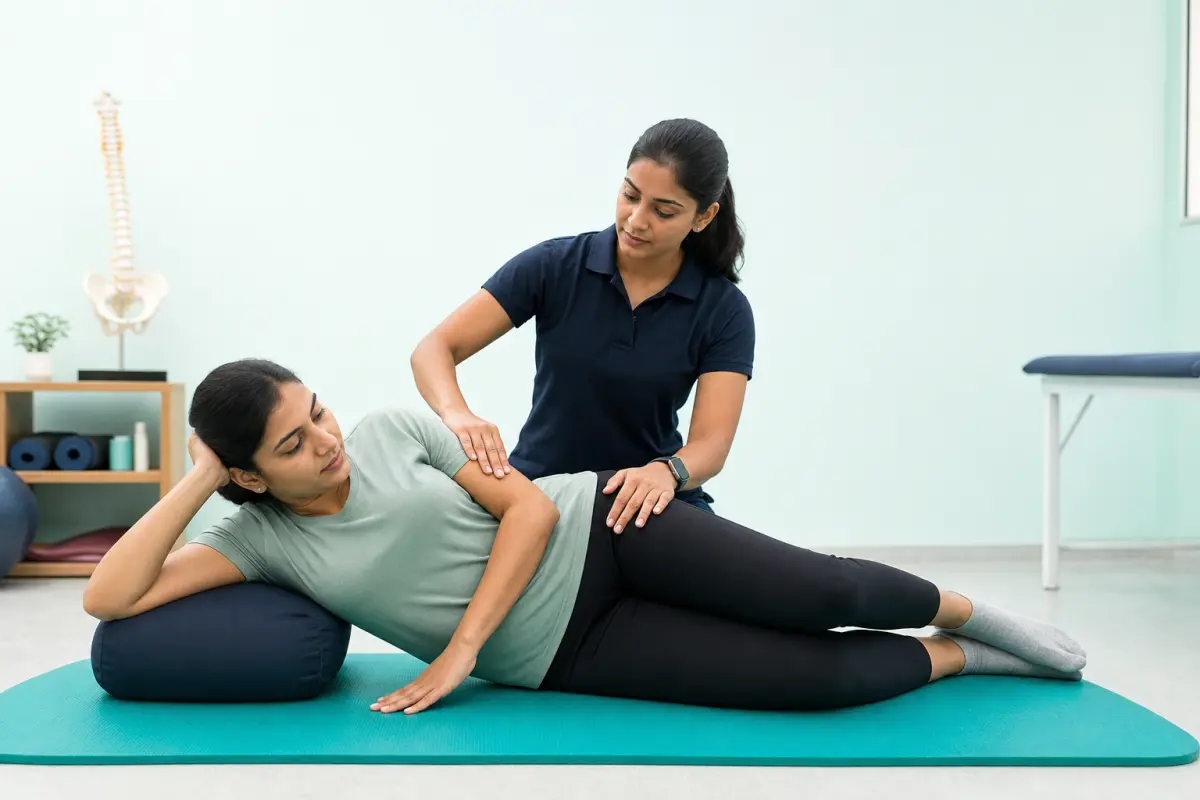
Manual Therapy
For back pain, manual therapy is considered when your assessment points to a pattern that responds to it. Hands-on joint and soft-tissue techniques to ease stiffness and protective guarding so you can move into exercise sooner. Used when irritability allows — never as a crack-everything ritual. At Quick Physio in Ghaziabad clinics or on home visits across Delhi NCR, we explain why this tool is in your plan — and when we will stop it if it is not helping.
Therapeutic Exercise
For back pain, therapeutic exercise is considered when your assessment points to a pattern that responds to it. Graded strength, control and mobility drills matched to your capacity. This is the backbone of lasting change for almost every mechanical and post-op plan. At Quick Physio in Ghaziabad clinics or on home visits across Delhi NCR, we explain why this tool is in your plan — and when we will stop it if it is not helping.
Electrotherapy (TENS / IFT)
For back pain, electrotherapy (tens / ift) is considered when your assessment points to a pattern that responds to it. Selective electrical modalities to calm pain enough that you can practise better movement. Always paired with exercise — not sold as a standalone cure. At Quick Physio in Ghaziabad clinics or on home visits across Delhi NCR, we explain why this tool is in your plan — and when we will stop it if it is not helping.
Dry Needling
For back pain, dry needling is considered when your assessment points to a pattern that responds to it. Targeted needling for myofascial trigger points when guarding limits motion. Consent-led, and followed by movement so relief is not temporary only. At Quick Physio in Ghaziabad clinics or on home visits across Delhi NCR, we explain why this tool is in your plan — and when we will stop it if it is not helping.
Soft Tissue Mobilization
For back pain, soft tissue mobilization is considered when your assessment points to a pattern that responds to it. Hands-on work on muscle and fascia that are over-guarding. Helps restore comfortable glide before endurance training starts. At Quick Physio in Ghaziabad clinics or on home visits across Delhi NCR, we explain why this tool is in your plan — and when we will stop it if it is not helping.
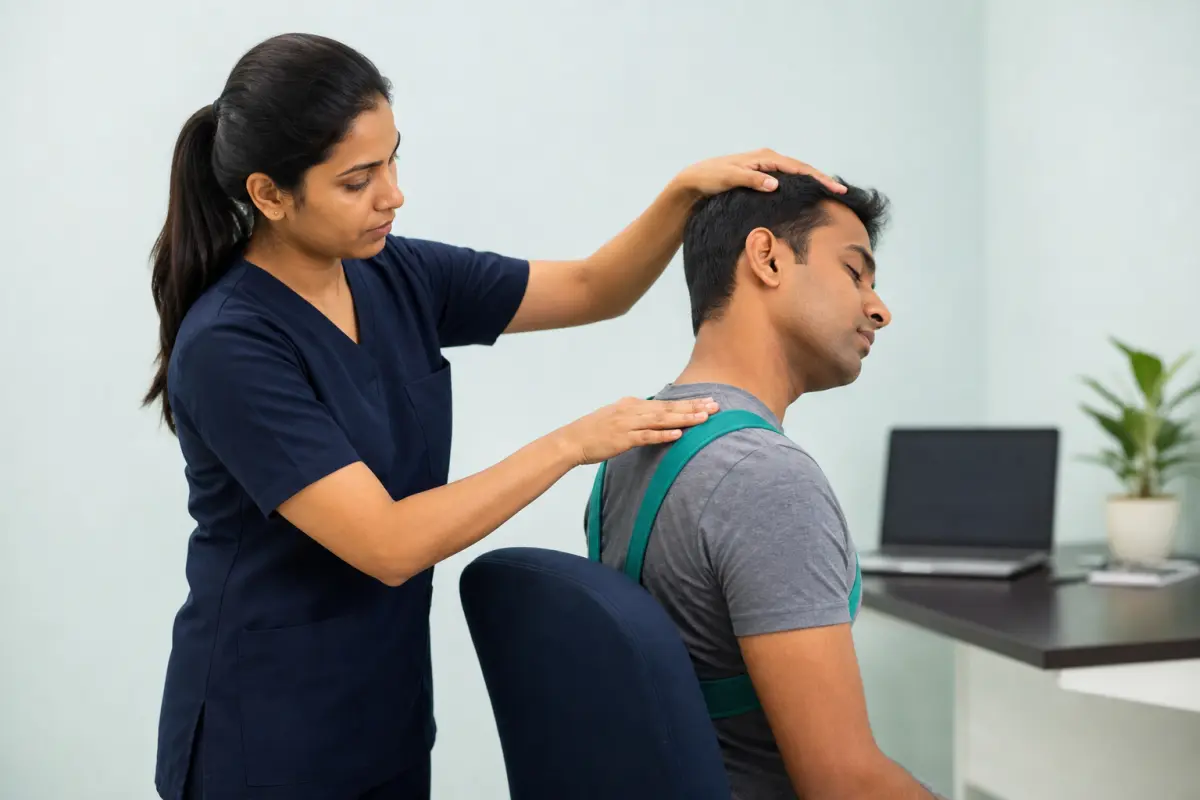
Posture & Ergonomics
For back pain, posture & ergonomics is considered when your assessment points to a pattern that responds to it. Desk, phone, sleep and commute setup coaching that survives Delhi NCR weeks — so clinic gains are not erased by Tuesday’s laptop. At Quick Physio in Ghaziabad clinics or on home visits across Delhi NCR, we explain why this tool is in your plan — and when we will stop it if it is not helping.
Cryotherapy / Heat Therapy
For back pain, cryotherapy / heat therapy is considered when your assessment points to a pattern that responds to it. Ice or heat to settle flares or ease stiffness so sessions and home practice are tolerable. Dosed by phase, not habit. At Quick Physio in Ghaziabad clinics or on home visits across Delhi NCR, we explain why this tool is in your plan — and when we will stop it if it is not helping.
Home physiotherapy
Not sure if this is back pain? Ask a senior physiotherapist first.
₹499 First session ₹499
Exercises for back pain
These are commonly used, physiotherapist-guided exercises. Learn correct technique in an assessment before starting on your own — the wrong form can do more harm than good.
Pelvic Tilt
- Purpose
- Gently mobilises the lower back and activates deep core muscles.
- How to perform
- Lie on your back, knees bent, feet flat. Flatten your lower back into the floor by gently tightening your lower abdominals, then release.
- Repetitions
- 2 sets of 10–12, held 3–5 seconds each.
- Common mistakes
- Holding your breath, or using your buttocks instead of your abdominals to move.
- Who should avoid it
- Not usually needed to avoid unless movement itself sharply increases leg symptoms — check with your physiotherapist.
Cat-Cow Stretch
- Purpose
- Improves spinal mobility through flexion and extension.
- How to perform
- On hands and knees, alternate between arching your back up (cat) and gently dipping it down (cow) with slow, controlled breathing.
- Repetitions
- 8–10 slow cycles, once or twice daily.
- Common mistakes
- Moving too fast or forcing range beyond a comfortable stretch.
- Who should avoid it
- Recent spinal fracture or unassessed severe acute flare — check first.
Child’s Pose
- Purpose
- Gently stretches the lower back, hips and lats while calming an irritable spine.
- How to perform
- Kneel with big toes together, sit hips back toward heels, and reach arms forward, lowering your chest toward the floor.
- Repetitions
- Hold 20–30 seconds, repeat 3–4 times.
- Common mistakes
- Forcing hips all the way back if knees or hips feel restricted.
- Who should avoid it
- Advanced knee pathology without cushioning under the knees.
Bird Dog
- Purpose
- Builds core stability and control while training the back to stay steady during limb movement.
- How to perform
- On hands and knees, extend one arm and the opposite leg simultaneously while keeping your spine still and level, then switch sides.
- Repetitions
- 2–3 sets of 8 per side.
- Common mistakes
- Letting the lower back sag or twisting the hips as the leg lifts.
- Who should avoid it
- Wrist pain — perform on forearms instead if needed.
Bridges
- Purpose
- Strengthens glutes and lower back extensors that support the spine.
- How to perform
- Lie on your back, knees bent, feet hip-width apart. Squeeze glutes and lift hips toward the ceiling, then lower slowly.
- Repetitions
- 2–3 sets of 10–15.
- Common mistakes
- Overarching the lower back at the top instead of driving through the glutes.
- Who should avoid it
- Recent hip surgery without clearance.
McKenzie Extension
- Purpose
- Eases certain disc-related and flexion-sensitive back pain by encouraging spinal extension.
- How to perform
- Lie face down, then prop up onto your forearms and progress to straightening your arms, keeping hips on the floor, without forcing pain.
- Repetitions
- 8–10 repetitions, several times a day if it eases symptoms.
- Common mistakes
- Pushing into pain instead of stopping at a comfortable stretch.
- Who should avoid it
- Extension-intolerant patterns — stop if it worsens leg symptoms and check with your physiotherapist.
Knee-to-Chest Stretch
- Purpose
- Gently stretches the lower back and glutes, often eases flexion-friendly back pain.
- How to perform
- Lying on your back, bring one knee toward your chest, holding behind the thigh, then switch legs.
- Repetitions
- Hold 20–30 seconds, 2–3 times per side.
- Common mistakes
- Pulling too hard or lifting the head and shoulders unnecessarily.
- Who should avoid it
- If it clearly increases leg pain, stop and consult your physiotherapist.
Hamstring Stretch
- Purpose
- Loosens tight hamstrings that can tilt the pelvis and load the lower back.
- How to perform
- Lying on your back, loop a towel or strap around one foot and gently straighten the knee, raising the leg until a stretch is felt.
- Repetitions
- Hold 20–30 seconds, 2–3 times per leg.
- Common mistakes
- Bouncing into the stretch or over-straightening the knee.
- Who should avoid it
- Acute hamstring or sciatic nerve irritability — go gently and stop if symptoms travel further down the leg.
Prevention tips
Sit with your lower back supported and screen at eye level
Bend your knees and hips (not your back) when lifting anything heavy
Choose a supportive mattress and a pillow that keeps your neck neutral
Set up your desk chair, monitor and keyboard to reduce slouching
Take a movement break every 30–45 minutes of sitting
Keep body weight in a healthy range for your frame
Build a habit of daily gentle stretching, especially hips and hamstrings
Strengthen your core 2–3 times a week rather than only when pain flares
Choose supportive, well-fitted footwear for long standing or walking days
Recovery timeline
Every recovery is different, but this is a realistic general overview for back pain:
Focus on pain control, gentle movement and understanding safe positions — avoiding both bed rest and pushing through sharp pain.
Mobility and basic strength improve; most people notice pain becoming less constant and more activity-dependent.
Return to normal daily activities, work tasks and light exercise, with a structured strengthening programme continuing.
Maintenance and prevention become the focus — ongoing core work, ergonomics and load management to keep flare-ups rare.
Recovery varies depending on the underlying condition, severity and how consistently the plan is followed.
Your recovery journey at Quick Physio
- Assessment and pain-pattern mapping
- Hands-on relief and mobility work
- Strength and load progression
- Home plan you can stick to
Why choose Quick Physio?
back pain in Delhi NCR life — why the week matters
Patients rarely fail back pain recovery because they are lazy. They fail because the week keeps reloading the same tissue: desk-and-drive lumbar irritability. Quick Physio treats that week — at home across Delhi NCR or in our Ghaziabad clinics — instead of pretending a perfect gym exists in your calendar.
Assessment names whether your pattern is primarily joint, soft-tissue, nerve-related, tendon, or deconditioning. That label decides which treatments we open first and which loads we temporarily edit.
Treatments we offer for back pain at Quick Physio
After assessment, your back pain plan may combine several physiotherapy treatments. We explain each choice: why it is in the plan this week, what you should feel, and when we will progress or stop it.
Home visits can deliver manual care, exercise coaching and ergonomics advice in your space. Clinic sessions at Vasundhara or Shastri Nagar add easier access to selective electrotherapy and ultrasound when indicated.
How to book a session for back pain
Use the Book Session form at the bottom of this page, call or WhatsApp +91 7900256729, or book the ₹499 first home physiotherapy session. Mention back pain and your locality so we match the right pathway.
Clinic first sessions are ₹199 at Vasundhara Sector 1 and Shastri Nagar. Follow-up pricing is transparent before you commit — assessment first.
Frequently asked questions
Do I need a scan before physio for back pain?
Often no. Many mechanical back pains improve with assessment-led physiotherapy. Scans are guided by your doctor when red flags or stalled progress suggest imaging.
Can I get back pain physio at home?
Yes. Quick Physio offers home visits across Delhi NCR when travel is difficult or you prefer treating in your own space.
Can physiotherapy cure back pain?
Physiotherapy can resolve most mechanical back pain and significantly reduce recurrence, though “cure” depends on the underlying cause — degenerative changes are managed rather than reversed.
How many sessions are needed?
Many people notice improvement within 2–6 sessions, with a fuller strengthening programme over 6–12 weeks depending on severity and how long the pain has been present.
Is bed rest recommended?
No — short rest for a day may help an acute flare, but prolonged bed rest usually delays recovery. Gentle, guided movement is almost always better.
Should I get an MRI?
Not always. Most mechanical back pain does not need imaging early on. Your physiotherapist or doctor will advise a scan if red flags or a stalled recovery suggest it.
Can I continue exercising?
Usually yes, with modifications. We help you adjust load and movement rather than stopping activity completely.
Is walking good for back pain?
Yes, in most cases. Walking is low-impact and encourages blood flow and gentle spinal movement without heavy loading.
Can back pain return?
It can, especially if the underlying strength and habits that caused it aren’t addressed — which is why we focus on prevention, not just short-term relief.
When is surgery required?
Surgery is considered only for specific situations — such as progressive neurological loss, certain structural instabilities, or when conservative care genuinely hasn’t helped after a fair trial.
Is it normal for back pain to move to the leg?
It can happen with nerve-related patterns like sciatica. It’s worth a proper assessment so treatment targets the right structures.
Can poor sleep make back pain worse?
Yes — pain and sleep affect each other. We often address sleep position and mattress support alongside your exercise plan.
Do I need to stop working with back pain?
Rarely completely. Most people can continue working with temporary task modifications while they recover.
Will core exercises alone fix my back?
Core strength helps but is one part of a bigger plan that includes mobility, load management, posture and gradual return to activity.
Is it safe to exercise with a disc bulge?
Often yes, with guidance on which movements to favour and which to temporarily limit — assessment decides the safest starting point.
How soon should I see a physiotherapist?
Earlier is generally better — waiting weeks with worsening pain or avoiding all movement can make recovery slower and more complicated.
What treatments does Quick Physio use for back pain?
Depending on assessment: Manual Therapy, Therapeutic Exercise, Electrotherapy (TENS / IFT), Dry Needling, Soft Tissue Mobilization, Posture & Ergonomics, Cryotherapy / Heat Therapy. Selection is individual.
Can I get home physiotherapy for back pain in Delhi NCR?
Yes. Many back pain plans start as home visits; clinic care is available in Ghaziabad when modalities or table space help.
How do I book a session for back pain?
Book Session form on this page, WhatsApp/call +91 7900256729, or ₹499 home offer — mention back pain.
Is back pain always a physiotherapy problem?
Often mechanical patterns respond well to physio, but red-flag symptoms need medical review first. We screen and refer when needed.
Will I get exercises for back pain?
Yes — graded exercises are central. Technique is coached in session so home practice is safe and specific.
Related conditions
Back Pain often overlaps with, or is confused for, these conditions — explore them if your pattern doesn’t fully match:
Related reading from our blog
Topic-cluster articles that build on this condition guide:

Home physiotherapy for back pain in Dehradun after Rajpur slopes and fog mornings
In Dehradun I meet backs that stiffened on a Rajpur Road climb before the desk even opened, then stayed guarded through a fog morning that never quite warmed.
Home physiotherapy for back pain in Lucknow after scooter, desk and marble-stair days
In Lucknow home visits I rarely meet a mysterious lumbar mystery. I meet a scooter hunch, a marble last flight, and a family evening already spent on the dhurrie.
Home physiotherapy for back pain in Mumbai after local-train stands and tower sofas
In Mumbai home visits I meet backs that spent the morning on a local, the afternoon in a BKC chair, and the night on a sofa that became a second office.
What your ₹499 home physiotherapy session in Dehradun includes
₹499 in Dehradun is not a callback teaser. It is a real first home session: we assess you on the slope and the chair you already use, treat what is safe that day, and leave a plan before anyone talks packages.
What your ₹499 home physiotherapy session in Lucknow includes
₹499 in Lucknow is not a callback teaser. It is a real first home session: we assess you on the marble and the chair you already use, treat what is safe that day, and leave a plan before anyone talks packages.
What your ₹499 home physiotherapy session in Mumbai includes
₹499 in Mumbai is not a callback teaser. It is a real first home session: we assess you in the lift lobby chair you already use, treat what is safe that day, and leave a plan before anyone talks packages.
Book Back Pain physiotherapy. Home visit or clinic care across Ghaziabad & Delhi NCR — assessment first, then a plan that fits your week.
Book Assessment · +91 79002 56729 Appointment & mapEducational information only. This page does not replace medical advice, diagnosis or emergency care. Seek urgent help for red-flag symptoms described above.