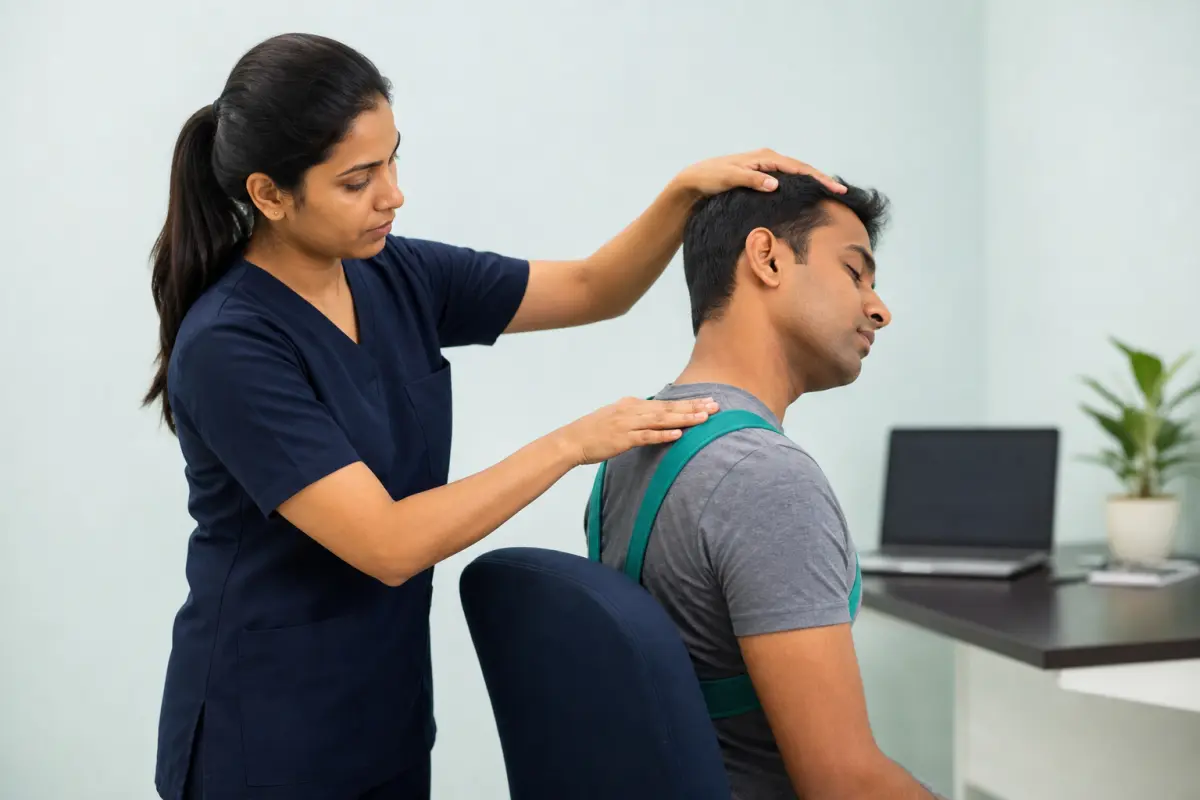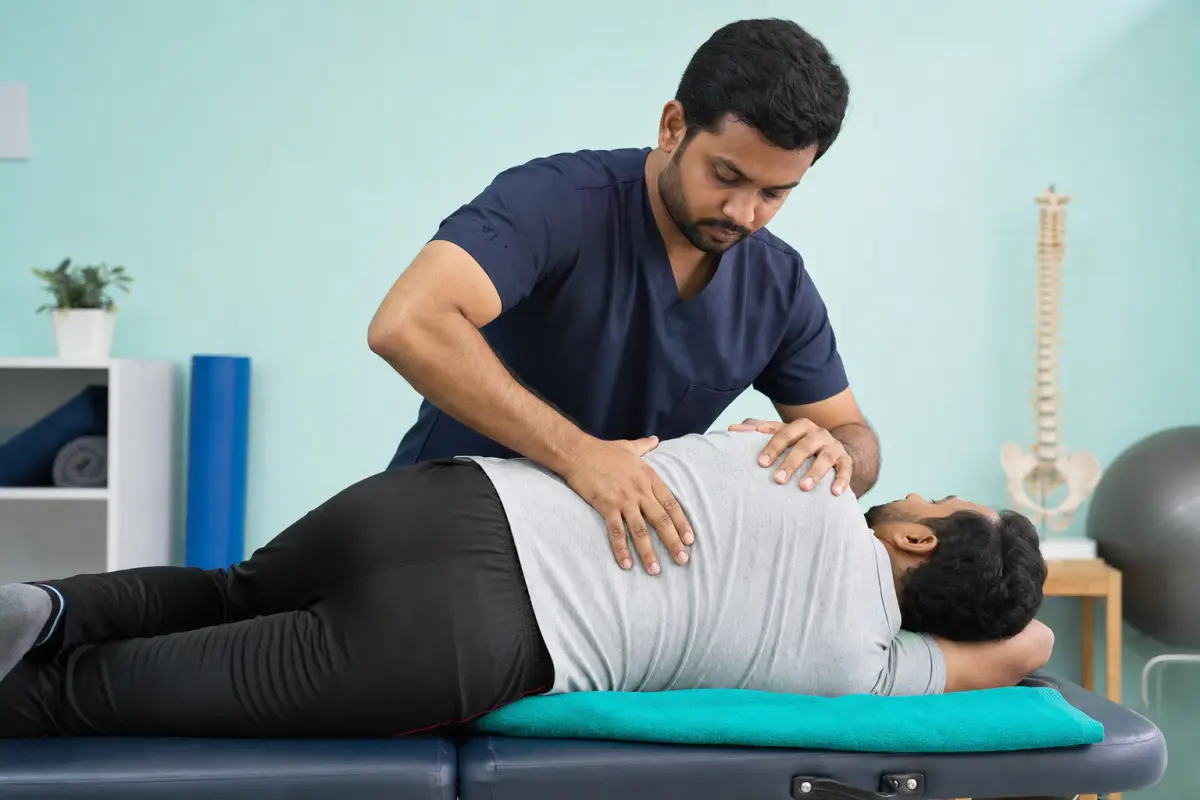
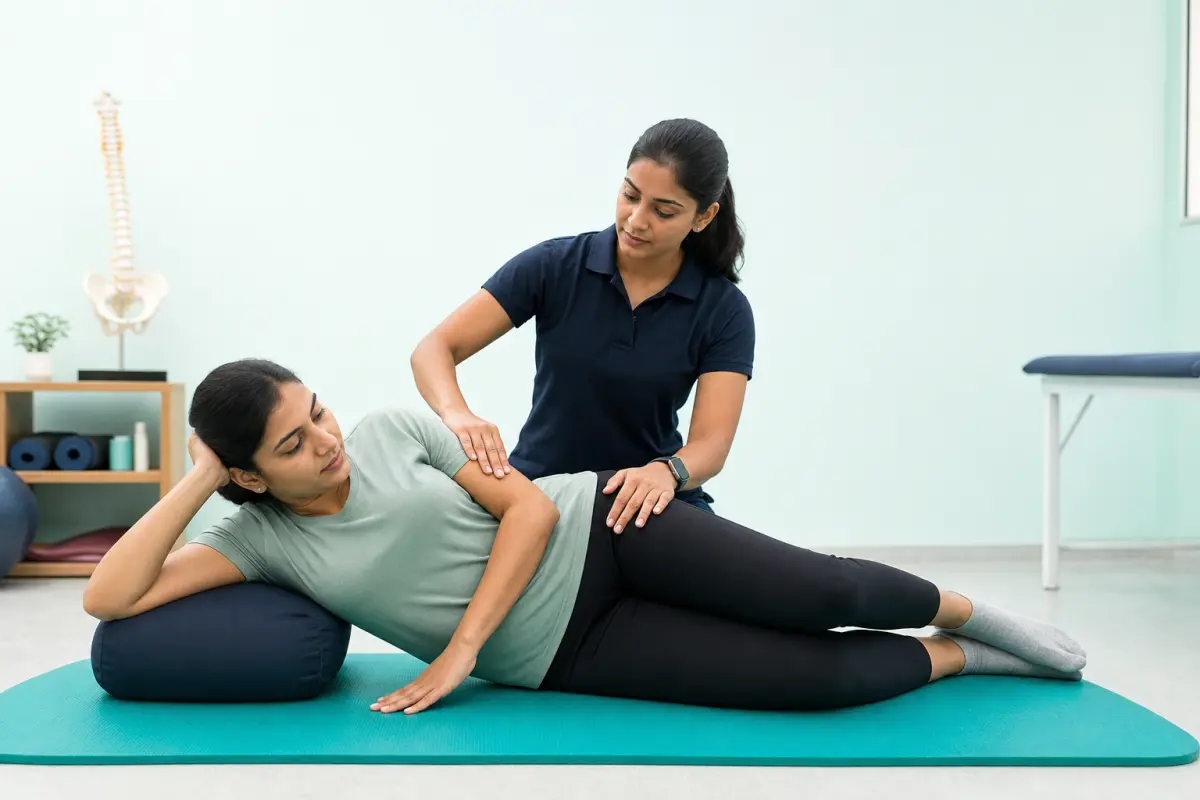


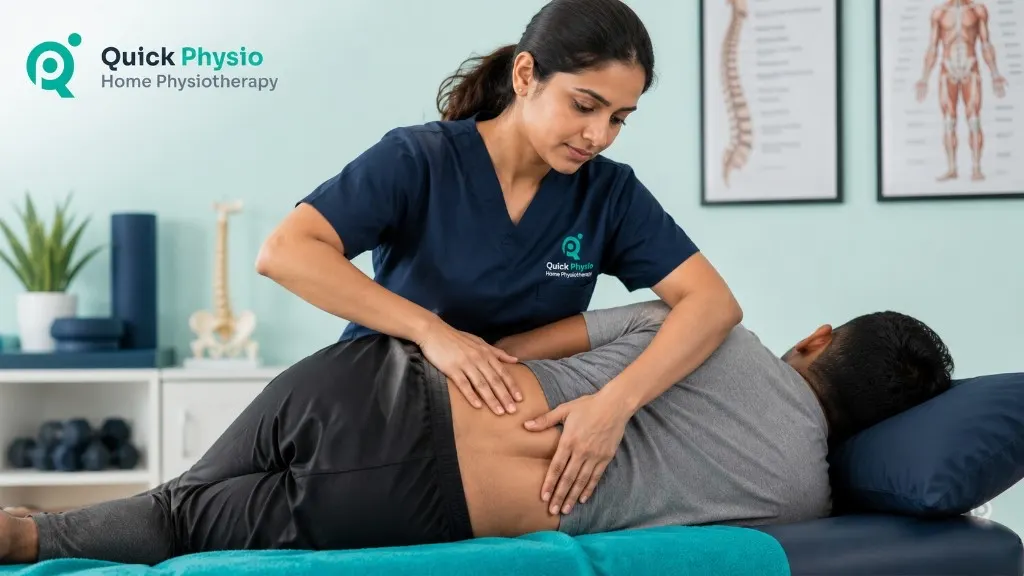
What is soft tissue mobilisation?
Soft tissue mobilisation includes hands-on techniques to ease muscle and fascial restriction so you can move and load better.
Wondering if this fits your problem? A short assessment tells us exactly what your plan should include.
Book Assessment · +91 79002 56729Techniques used
“Soft Tissue Mobilisation” isn’t one single move — here’s what it can include:
Myofascial release
Sustained gentle pressure through muscle and connective tissue layers to ease restriction and tightness.
Deep friction massage
Focused, firmer strokes across a specific tight or fibrous area to improve local tissue mobility.
Trigger-point pressure release
Sustained manual pressure on an irritable muscle knot to encourage it to release without needling.
How it helps
- Reduce protective muscle tightness
- Improve comfort before exercise
- Complements dry needling and manual therapy
Benefits
- Eases protective muscle tightness that limits comfortable movement
- Improves comfort before exercise, especially in muscle-dominant pain patterns
- Complements dry needling and joint mobilisation well
What to expect in a session
Here’s the general flow — your physiotherapist will adapt it to your condition and stage of recovery:
Palpation assessment
Your physiotherapist identifies the specific tight or restricted tissue contributing to your symptoms.
Technique selection
The right pressure and technique (release, friction or point pressure) is chosen for that tissue.
Hands-on application
Sustained or rhythmic pressure is applied, checking your comfort throughout.
Movement reintegration
The area is gently moved and exercised right after to lock in the improved mobility.
When we use it
Neck, back, shoulder and hip muscle-dominant patterns.
Who this typically suits
- Muscle-dominant neck, back, shoulder and hip pain
- Patients with significant protective muscle guarding
- Anyone whose stiffness feels more “muscular” than “joint-locked”
Precautions & who should be cautious
- Avoided directly over acute injuries, active infection, or fragile skin
- Pressure is graded down significantly for very irritable tissue
Conditions we treat with soft tissue work
Neck Pain
Eases the upper trapezius and levator scapulae tightness typical of desk-driven neck pain.
Back Pain
Reduces paraspinal muscle guarding that often accompanies mechanical back pain.
Shoulder Strain & Overuse
Targets tight muscles around the shoulder blade contributing to overuse strain.
Learn more → Shoulder Strain & Overuse
Hip Pain
Eases tight glute and hip flexor muscles that commonly refer pain around the hip.
Sciatica
Can reduce piriformis and deep hip muscle tightness that sometimes aggravates sciatic symptoms.
Available across Delhi NCR
Part of clinic and home physiotherapy sessions across Delhi NCR.
Why choose Quick Physio?
Frequently asked questions
Is soft tissue mobilisation the same as a spa massage?
It shares some techniques but is applied with a specific clinical goal tied to your assessment findings, not general relaxation.
Will I be sore afterwards?
Mild, short-lived soreness is common, similar to how a deep massage can feel the next day.
Treatments are selected after assessment. Not every modality suits every person — your physiotherapist will explain options and take consent.