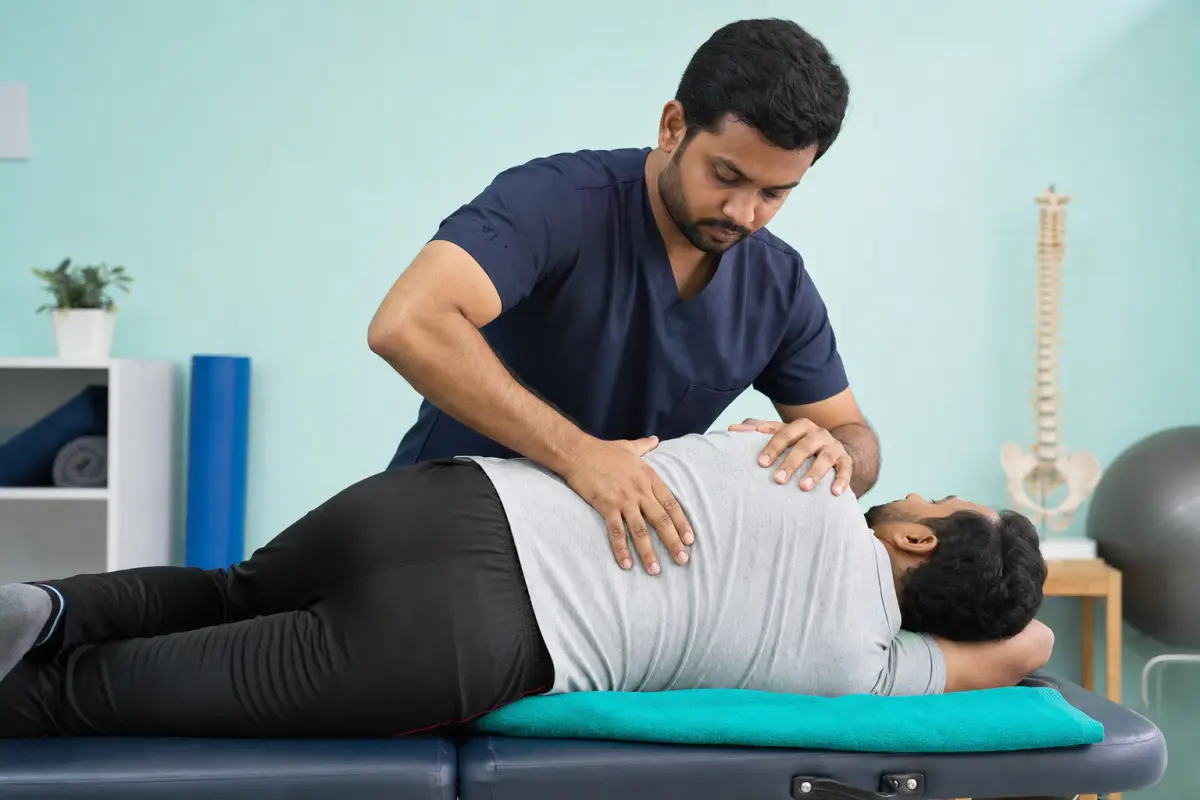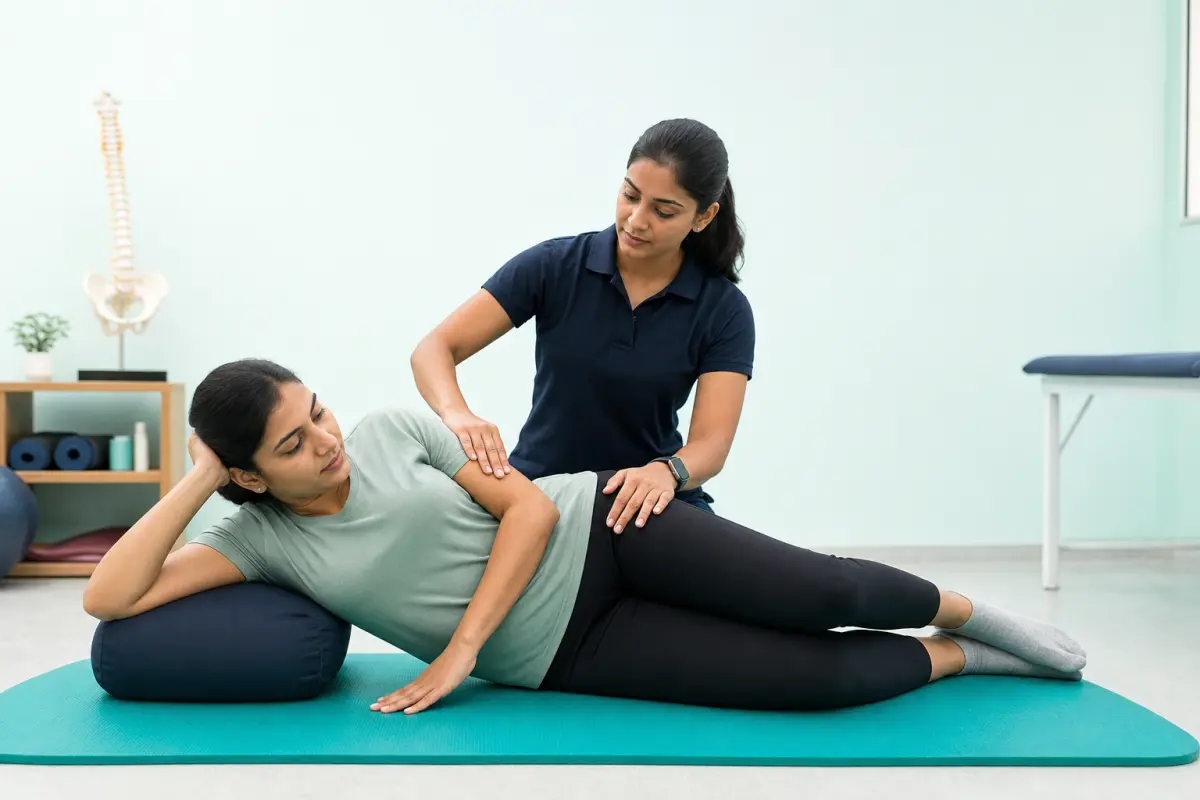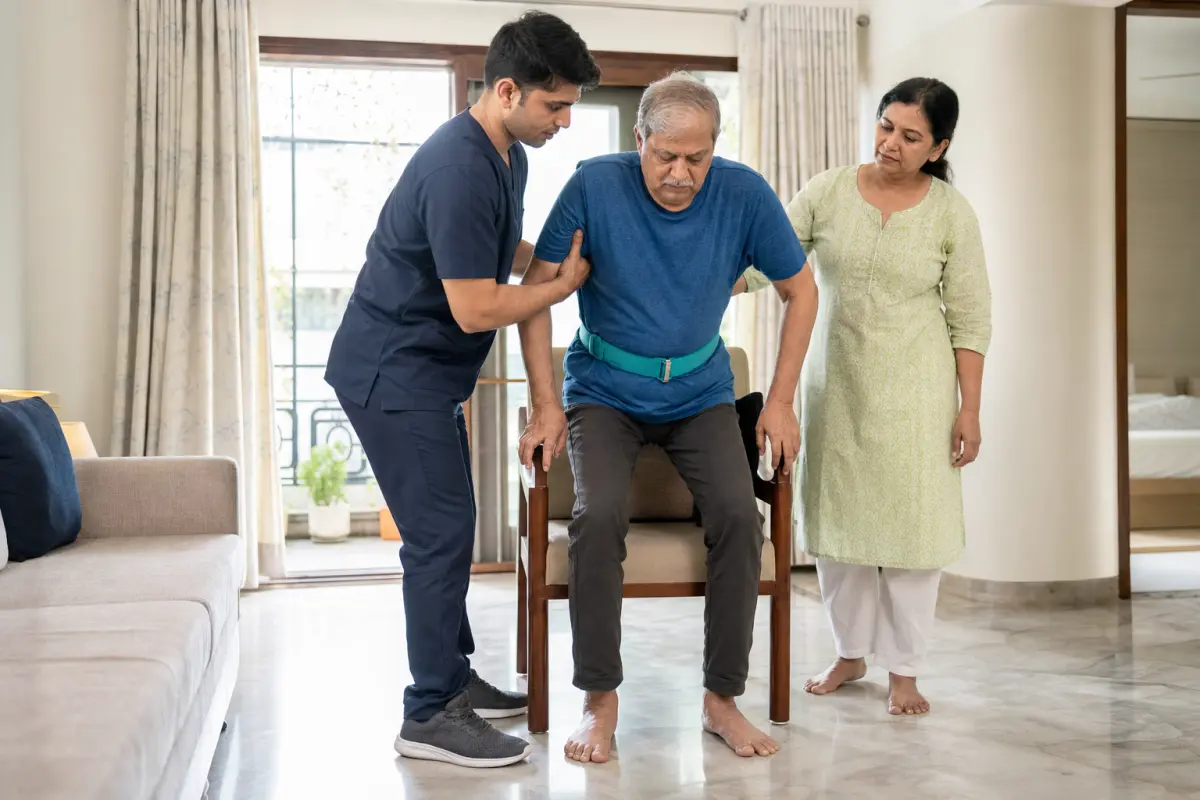




What is therapeutic exercise?
Therapeutic exercise is prescribed movement — mobility, strength, balance and sport-specific drills — progressed as your tissue and confidence improve.
Wondering if this fits your problem? A short assessment tells us exactly what your plan should include.
Book Assessment · +91 79002 56729Techniques used
“Therapeutic Exercise” isn’t one single move — here’s what it can include:
Mobility drills
Controlled range-of-motion movements that restore comfortable movement in a stiff joint or muscle group.
Strength progressions
Bodyweight, band or light-load exercises progressed in difficulty as your tissue tolerance improves.
Motor control training
Exercises that retrain how muscles fire and coordinate, correcting patterns that overload the painful area.
Functional / sport-specific drills
Later-stage exercises that mimic real tasks — lifting, squatting, running, reaching — to prepare for full return to activity.
How it helps
- Rebuild capacity so pain flares less often
- Correct movement patterns that keep reloading the problem
- Safe progressions for home between sessions
- Works for ortho, sports, neuro and prenatal pathways
Benefits
- The single most evidence-backed driver of lasting recovery
- Builds the strength and control that prevent recurrence, not just symptom relief
- Adaptable to every stage — from bed-bound to elite sport
- Gives you an active role in your own recovery, not passive treatment
- Transfers into daily tasks: lifting, walking, sitting, sleeping
What to expect in a session
Here’s the general flow — your physiotherapist will adapt it to your condition and stage of recovery:
Baseline check
Your physiotherapist checks pain, range and tolerance from the last session to decide today’s starting load.
Warm-up movement
Light mobility work prepares the area and confirms nothing has changed since your last visit.
Guided exercise set
You perform the prescribed exercises with real-time correction of form, breathing and pacing.
Progression + home plan
Reps, load or complexity are adjusted, and your home exercise sheet is updated for the days between sessions.
When we use it
Almost every recovery plan includes exercise — the dose and type change by condition.
Who this typically suits
- Almost everyone — this is the backbone of nearly every physiotherapy plan
- Anyone wanting long-term prevention, not just short-term relief
- Post-surgery, post-injury and chronic pain rehabilitation
- Sports, prenatal, postnatal and neurological populations alike
Precautions & who should be cautious
- Dosed carefully in acute flares — “more” is not always better early on
- Progressed only after checking your response to the previous session
- Modified around specific medical precautions (e.g. post-surgical protocols, pregnancy stage)
Conditions we treat with exercise therapy
Back Pain
Core, hip and back-extensor strengthening is the exercise foundation that keeps mechanical back pain from returning.
Knee Pain
Quad, hamstring and hip strengthening rebuilds the support your knee needs for stairs, walking and sport.
Hip Pain
Targeted gluteal and hip strengthening addresses the weakness behind most non-arthritic hip pain.
Ankle Sprain
Balance and strength drills are what actually prevent the classic pattern of repeated ankle sprains.
Osteoarthritis (Joint Wear Pain)
Consistent strengthening around an arthritic joint is a core, evidence-based treatment — not something to avoid.
Learn more → Osteoarthritis (Joint Wear Pain)
Pre & Post-Surgery Rehab
Structured, protocol-guided exercise is what rebuilds strength and confidence after surgery, at the pace your surgeon allows.
Learn more → Pre & Post-Surgery Rehab
Post-Stroke Mobility
Task-specific practice — standing, walking, reaching — is how function is rebuilt after a stroke.
Learn more → Post-Stroke Mobility
Pregnancy-Related Pain
Safe, trimester-adapted exercise reduces pregnancy-related back and pelvic discomfort more than rest alone.
Learn more → Pregnancy-Related Pain
Available across Delhi NCR
Supervised in clinic, coached at home visits, and reinforced with clear home programmes across Delhi NCR.
Why choose Quick Physio?
Frequently asked questions
Will exercise make my pain worse?
Correctly dosed exercise is designed to work within your tolerance; some mild, short-lived soreness is normal, sharp worsening pain is not and should be reported.
Can I just do exercises from the internet?
Generic exercises aren’t matched to your specific weaknesses or precautions — a guided programme is more effective and safer.
How often should I do my home exercises?
Most home programmes are designed for daily or near-daily practice; your physiotherapist will give a specific frequency for your plan.
How long until I see results from exercise therapy?
Many people notice change within 2–4 weeks of consistent practice, with fuller strength gains building over 6–12 weeks.
Treatments are selected after assessment. Not every modality suits every person — your physiotherapist will explain options and take consent.