

What is pre & post-surgery rehab?
Post-surgery rehab is structured physiotherapy after operations such as knee or hip replacement, ACL repair or fracture fixation. Prehab prepares you before surgery when time allows.
Why does this problem happen?
Surgery changes tissue and confidence. Swelling, pain inhibition and protective habits reduce motion and strength quickly — guided rehab restores them on a timeline your surgeon expects.

What kinds of pre & post-surgery rehab can occur?
Not every case feels the same. These are common patterns we see in clinic and home visits across Delhi NCR:
Knee replacement (TKR) rehab
Early swelling control, knee bend/extension targets, quad activation, then gait and stairs on a surgeon-guided timeline.
Hip replacement (THR) rehab
Safe transfers and walking with precautions as advised, then hip strength and community mobility.
ACL / ligament reconstruction rehab
Criteria-based phases from protection to strength, running and sport — rushing criteria raises re-injury risk.
Fracture fixation recovery
Respect healing timelines while restoring motion and strength around the fixed bone — home visits help early on.
Prehabilitation before surgery
Build strength, motion and confidence before the operation so day-one post-op mobility starts from a better baseline.
Common causes & triggers
These are frequent reasons pre & post-surgery rehab starts or keeps returning:
- Planned joint replacement or ligament surgery
- Fracture fixation recovery
- Prolonged immobilisation
- Fear-avoidance after operation
- Delayed start of safe mobility
Risk factors — who is more at risk?
These factors don’t guarantee pre & post-surgery rehab, but they raise the odds and are worth addressing alongside treatment:
- Limited home support
- Pre-op weakness
- Missed early rehab windows

Recognise your pattern? A clear assessment is faster than guessing exercises from the internet.
Call +91 79002 56729 WhatsApp usSigns & symptoms
- Post-op stiffness and swelling
- Difficulty with stairs or transfers
- Fear of moving the operated limb
- Need for a clear week-by-week plan
Expected post-op swelling and stiffness
Puffiness and limited motion are normal early; the goal is guided progress, not zero swelling overnight.
Difficulty with transfers
Bed, chair and toilet transfers often feel scary at first — practising them safely is core rehab, not an extra.
Quad shutdown after knee surgery
The thigh muscle can feel like it “won’t switch on”; early activation drills are designed exactly for this.
Uneven or cautious gait
Limping protects pain but can linger past healing if strength and confidence are not rebuilt on purpose.
Fear of putting weight through the limb
Weight-bearing status is set by your surgeon; within those rules we restore trust step by step.
Plateau in range of motion
If bend or straightening stalls against protocol targets, earlier focused physio usually helps more than waiting longer.
When should you see a physiotherapist?
Start as advised by your surgeon. Early, safe mobility often protects outcomes — we coordinate with your medical timeline.
Seek urgent medical attention for bowel/bladder changes, rapidly worsening weakness, unexplained weight loss, fever, or symptoms following major trauma — these are emergency signs, not routine physiotherapy concerns.
How physiotherapy helps
We follow protocol phases: protect, restore motion, rebuild strength, return to function — with home visits when travel is hard.
- Surgeon-aligned goal setting: We read your precautions and build weekly targets that match the operation you had — not a generic exercise sheet.
- Early safe mobility: Circulation work, swelling care and permitted motion start as soon as you are cleared, often at home.
- Restore joint motion on protocol: Assisted and active range work hits the bend/extension or hip mobility milestones your surgeon expects.
- Strength and gait rebuild: Muscle activation progresses into walking pattern, stairs and community distances you actually need.
- Home environment strategies: Chair height, bathroom setup and caregiver coaching reduce risk while independence grows.
- Return-to-life milestones: Work, driving, sport or travel goals are staged with clear criteria rather than calendar guessing alone.
Treatments we may use for pre & post-surgery rehab
Based on your assessment, your plan may include one or more of these physiotherapy treatments:


Treatments we offer for pre & post-surgery rehab
Quick Physio does not run a one-modality clinic. After assessment, your plan for pre & post-surgery rehab may combine several of these treatments — chosen for your irritability, goals and whether you are seen at home or in our Ghaziabad clinics.
Therapeutic Exercise
For post surgery rehab, therapeutic exercise is considered when your assessment points to a pattern that responds to it. Graded strength, control and mobility drills matched to your capacity. This is the backbone of lasting change for almost every mechanical and post-op plan. At Quick Physio in Ghaziabad clinics or on home visits across Delhi NCR, we explain why this tool is in your plan — and when we will stop it if it is not helping.
Manual Therapy
For post surgery rehab, manual therapy is considered when your assessment points to a pattern that responds to it. Hands-on joint and soft-tissue techniques to ease stiffness and protective guarding so you can move into exercise sooner. Used when irritability allows — never as a crack-everything ritual. At Quick Physio in Ghaziabad clinics or on home visits across Delhi NCR, we explain why this tool is in your plan — and when we will stop it if it is not helping.
Cryotherapy / Heat Therapy
For post surgery rehab, cryotherapy / heat therapy is considered when your assessment points to a pattern that responds to it. Ice or heat to settle flares or ease stiffness so sessions and home practice are tolerable. Dosed by phase, not habit. At Quick Physio in Ghaziabad clinics or on home visits across Delhi NCR, we explain why this tool is in your plan — and when we will stop it if it is not helping.
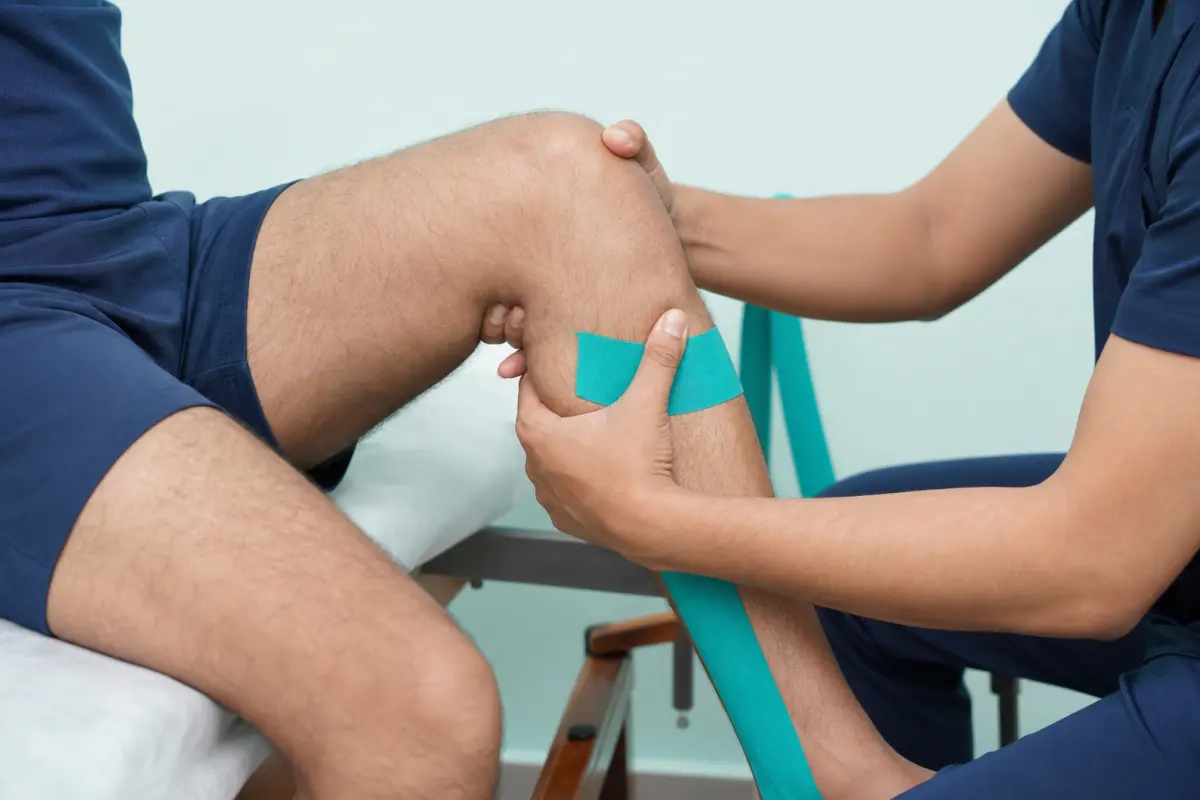
Kinesio Taping
For post surgery rehab, kinesio taping is considered when your assessment points to a pattern that responds to it. Tape as a short-term support or proprioceptive cue during return to walk, desk or sport — never a substitute for strength. At Quick Physio in Ghaziabad clinics or on home visits across Delhi NCR, we explain why this tool is in your plan — and when we will stop it if it is not helping.
Home physiotherapy
Not sure if this is pre & post-surgery rehab? Ask a senior physiotherapist first.
₹499 First session ₹499
Exercises for pre & post-surgery rehab
These are commonly used, physiotherapist-guided exercises. Learn correct technique in an assessment before starting on your own — the wrong form can do more harm than good.
Ankle Pumps
- Purpose
- Supports circulation and reduces swelling risk after lower-limb surgery.
- How to perform
- Lying or sitting, gently move your ankle up and down.
- Repetitions
- 10–15 repetitions every hour while resting early after surgery.
- Common mistakes
- Skipping this simple but important early exercise.
- Who should avoid it
- Follow your surgeon’s specific precautions if given.
Quad Sets
- Purpose
- Maintains muscle activation, particularly after knee surgery.
- How to perform
- Lying with the leg straight, gently tighten the thigh muscle and press the knee down, then release.
- Repetitions
- 2–3 sets of 10–15 as tolerated.
- Common mistakes
- Overexerting beyond your surgeon’s early guidelines.
- Who should avoid it
- Any movement outside your specific post-op protocol.
Assisted Range of Motion
- Purpose
- Restores safe movement within protocol-guided limits.
- How to perform
- With physiotherapist guidance, gently move the operated joint through the range currently permitted.
- Repetitions
- As directed by your rehabilitation protocol.
- Common mistakes
- Progressing range faster than your surgeon’s timeline allows.
- Who should avoid it
- Any range flagged as restricted in your specific protocol.
Progressive Weight Bearing / Gait Training
- Purpose
- Rebuilds safe walking pattern as healing allows.
- How to perform
- Using the walking aid advised, progress weight-bearing and step pattern under guidance.
- Repetitions
- As progressed by your physiotherapist over sessions.
- Common mistakes
- Rushing off walking aids before cleared.
- Who should avoid it
- Bearing more weight than your surgical protocol currently allows.
Prevention tips
Follow your surgeon’s specific weight-bearing and movement precautions closely
Start safe, early mobility as soon as cleared rather than staying still longer than needed
Attend all follow-up rehabilitation sessions to stay on protocol
Address swelling promptly with elevation and guided exercise
Build strength progressively rather than trying to “catch up” quickly
Recovery timeline
Every recovery is different, but this is a realistic general overview for pre & post-surgery rehab:
Protect the surgical site, manage swelling and begin protocol-approved gentle movement.
Progressive range-of-motion work as tissue healing allows.
Structured strengthening and gait or function-specific training.
Timelines vary significantly by surgery type — your surgeon and physiotherapist will guide realistic milestones.
Recovery varies depending on the underlying condition, severity and how consistently the plan is followed.
Your recovery journey at Quick Physio
- Match protocol to your operation (TKR, THR, ACL, fracture)
- Swelling care and permitted early motion
- Quad/hip activation into gait and stairs
- Independence milestones — transfers, walk, work or sport
Why choose Quick Physio?
post surgery rehab in Delhi NCR life — why the week matters
Patients rarely fail post surgery rehab recovery because they are lazy. They fail because the week keeps reloading the same tissue: TKR, spine and shoulder early weeks when clinic travel is hard. Quick Physio treats that week — at home across Delhi NCR or in our Ghaziabad clinics — instead of pretending a perfect gym exists in your calendar.
Assessment names whether your pattern is primarily joint, soft-tissue, nerve-related, tendon, or deconditioning. That label decides which treatments we open first and which loads we temporarily edit.
Treatments we offer for post surgery rehab at Quick Physio
After assessment, your post surgery rehab plan may combine several physiotherapy treatments. We explain each choice: why it is in the plan this week, what you should feel, and when we will progress or stop it.
Home visits can deliver manual care, exercise coaching and ergonomics advice in your space. Clinic sessions at Vasundhara or Shastri Nagar add easier access to selective electrotherapy and ultrasound when indicated.
How to book a session for post surgery rehab
Use the Book Session form at the bottom of this page, call or WhatsApp +91 7900256729, or book the ₹499 first home physiotherapy session. Mention post surgery rehab and your locality so we match the right pathway.
Clinic first sessions are ₹199 at Vasundhara Sector 1 and Shastri Nagar. Follow-up pricing is transparent before you commit — assessment first.
Frequently asked questions
When should I start physiotherapy after surgery?
This depends entirely on your surgeon’s protocol — some rehab starts within days, others require a longer initial rest phase.
Can physiotherapy be done at home after surgery?
Yes, home visits are often ideal in the early post-op period when travel is difficult.
How long is rehab after joint replacement?
Typically several weeks to a few months for good functional recovery, though continued strengthening benefits long-term outcomes.
What if my knee won’t bend enough after TKR?
Early, consistent motion work within your surgeon’s targets matters. Tell your surgical team and physiotherapist promptly if range stalls — waiting weeks hoping it “loosens itself” often makes recovery harder.
Should I do prehab before my operation?
When time allows, yes. Better strength and motion before surgery often make the first post-op weeks feel more manageable.
When can I stop using a walker or stick?
When your surgeon’s weight-bearing rules and your strength, pain and gait quality support it — not simply when a certain number of days have passed.
What treatments does Quick Physio use for post surgery rehab?
Depending on assessment: Therapeutic Exercise, Manual Therapy, Cryotherapy / Heat Therapy, Kinesio Taping. Selection is individual.
Can I get home physiotherapy for post surgery rehab in Delhi NCR?
Yes. Many post surgery rehab plans start as home visits; clinic care is available in Ghaziabad when modalities or table space help.
How do I book a session for post surgery rehab?
Book Session form on this page, WhatsApp/call +91 7900256729, or ₹499 home offer — mention post surgery rehab.
Is post surgery rehab always a physiotherapy problem?
Often mechanical patterns respond well to physio, but red-flag symptoms need medical review first. We screen and refer when needed.
Will I get exercises for post surgery rehab?
Yes — graded exercises are central. Technique is coached in session so home practice is safe and specific.
Does recovery time for post surgery rehab vary by age and work load?
Yes. Desk-heavy NCR weeks, stair living and training history all change timelines. We set expectations after seeing your irritability and goals.
Related conditions
Pre & Post-Surgery Rehab often overlaps with, or is confused for, these conditions — explore them if your pattern doesn’t fully match:
Related reading from our blog
Topic-cluster articles that build on this condition guide:
Post-surgery home physiotherapy in Gurugram — early weeks from ₹499
Early post-op weeks in Gurugram fail on logistics more than on “motivation.” A cab to a clinic can be the hardest part of the day. Home physio starts in the room you already sleep in.
Post-surgery home rehab in Ghaziabad — TKR, spine and shoulder
Early post-op weeks are when stairs and cars hurt most — home rehab keeps dosage honest after hospital discharge.
Post-surgery home rehab — TKR and spine early weeks in Noida and South Delhi
Early weeks are when cars and stairs hurt most. Home rehab keeps surgeon protocols alive inside your flat.
Book post-surgery physiotherapy. Protocol-led rehab after joint replacement, ligament repair or fracture care — home or clinic, paced to your surgeon’s plan.
Book Assessment · +91 79002 56729 Appointment & mapEducational information only. This page does not replace medical advice, diagnosis or emergency care. Seek urgent help for red-flag symptoms described above.