

What is cervical spondylosis?
Cervical spondylosis refers to age-related changes in the neck joints and discs that can cause stiffness, grinding sensations and activity-related neck pain. Many people have changes on scans without severe symptoms — physio focuses on what you feel and can do.
Why does this problem happen?
Discs lose some hydration with age; joints can develop bony changes. Combined with desk posture and weak deep neck endurance, the neck becomes irritable. Movement and strength still help most mechanical patterns; progressive neurological signs need medical review.
What kinds of cervical spondylosis can occur?
Not every case feels the same. These are common patterns we see in clinic and home visits across Delhi NCR:
Stiffness-dominant spondylosis
Morning stiffness and grinding with turning.
Pain with extension / looking up
Overhead tasks and shelves flare symptoms.
Neck pain with arm symptoms
May involve foraminal irritation — assess carefully.
Chronic postural flare pattern
Desk days predict evening pain.
Common causes & triggers
These are frequent reasons cervical spondylosis starts or keeps returning:
- Age-related disc and joint change
- Long-term forward head posture
- Repetitive extension or rotation under load
- Previous neck injuries
- Low deep-neck muscle endurance
Risk factors — who is more at risk?
These factors don’t guarantee cervical spondylosis, but they raise the odds and are worth addressing alongside treatment:
- Age over 40–50
- Desk-heavy careers
- Smoking
- Previous cervical injury
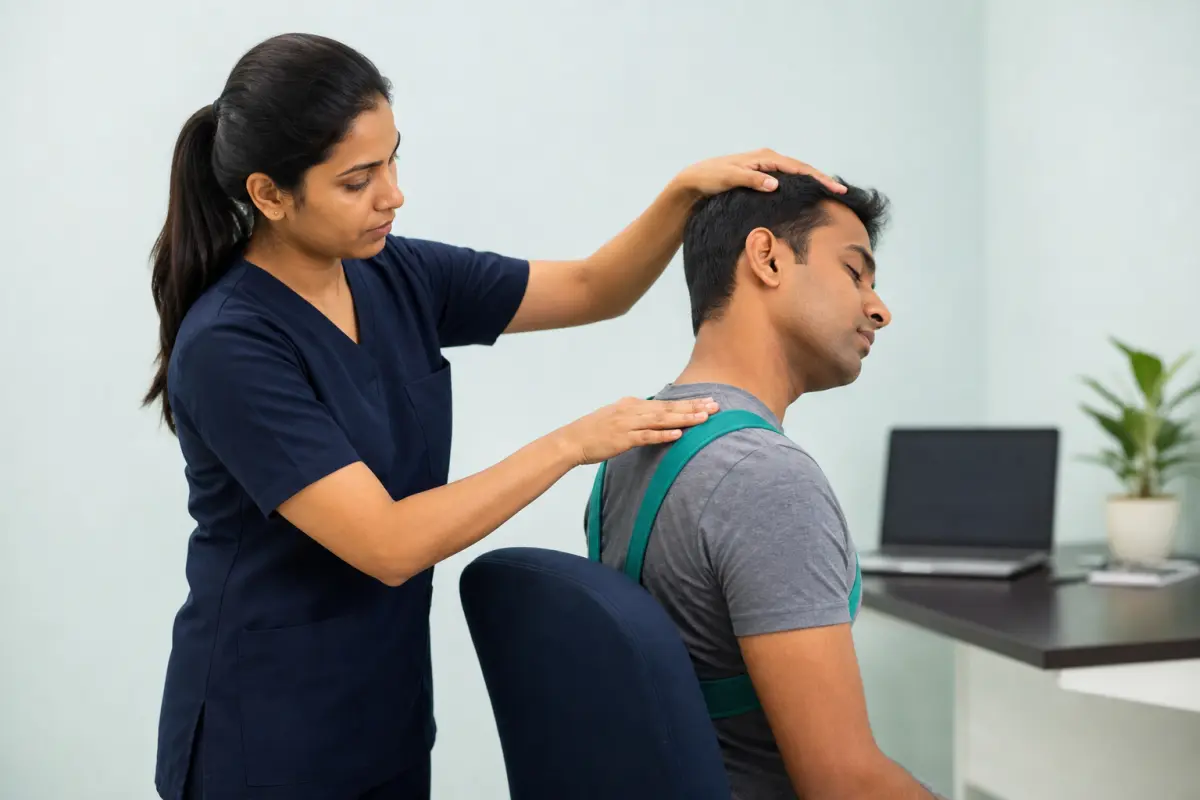
Recognise your pattern? A clear assessment is faster than guessing exercises from the internet.
Call +91 79002 56729 WhatsApp usSigns & symptoms
- Long-standing neck stiffness
- Grating or grinding sensations
- Pain with extension or rotation
- Occasional arm referral
When should you see a physiotherapist?
Physio helps many mechanical patterns. Seek medical review for progressive arm weakness, gait change, or severe unremitting pain.
Seek urgent medical attention for bowel/bladder changes, rapidly worsening weakness, unexplained weight loss, fever, or symptoms following major trauma — these are emergency signs, not routine physiotherapy concerns.
How physiotherapy helps
We improve comfortable range, build deep neck and scapular endurance, and reduce provocative postures — realistic goals for durable necks.
Treatments we may use for cervical spondylosis
Based on your assessment, your plan may include one or more of these physiotherapy treatments:



Treatments we offer for cervical spondylosis
Quick Physio does not run a one-modality clinic. After assessment, your plan for cervical spondylosis may combine several of these treatments — chosen for your irritability, goals and whether you are seen at home or in our Ghaziabad clinics.
Manual Therapy
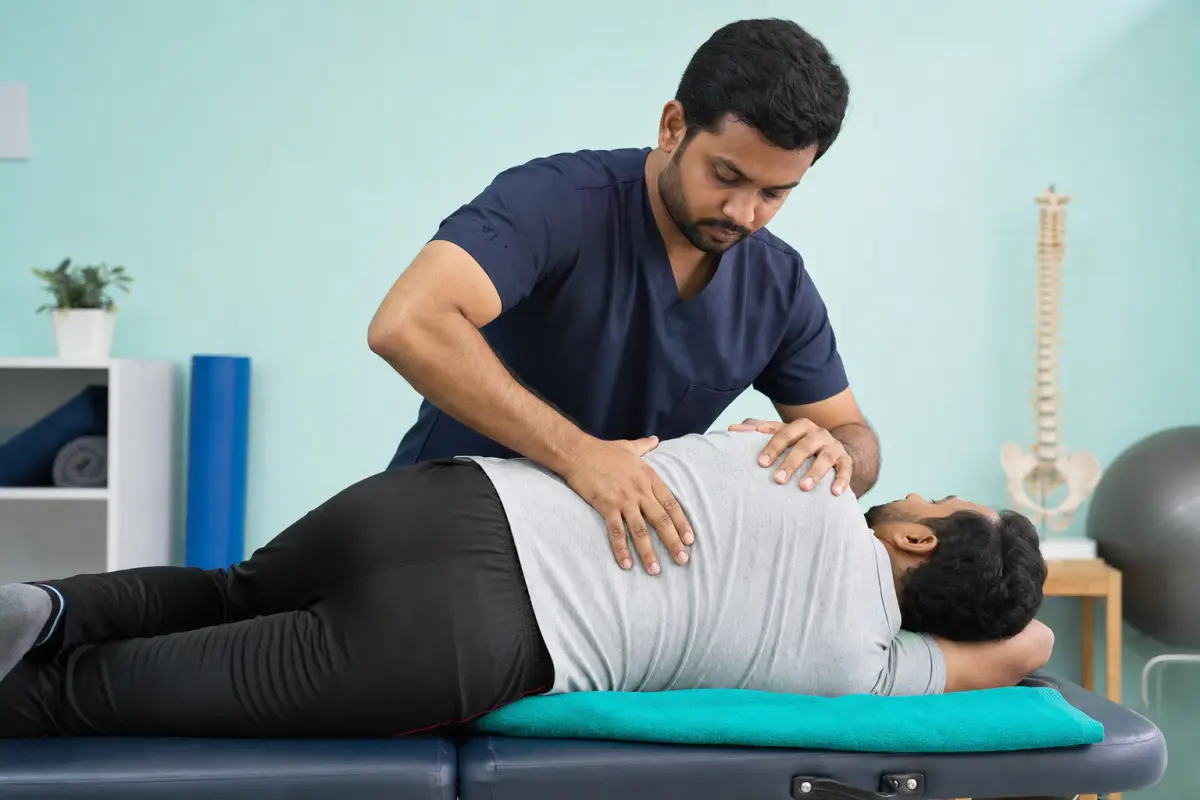
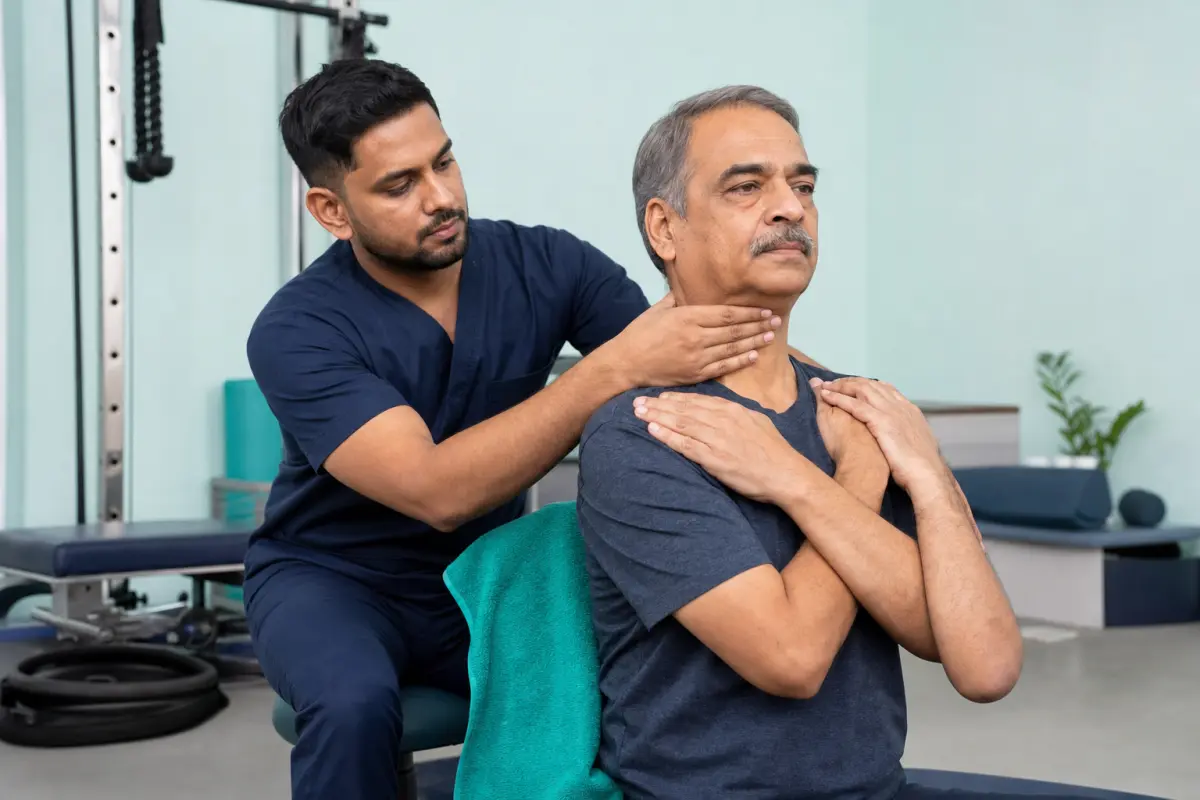
For cervical spondylosis, manual therapy is considered when your assessment points to a pattern that responds to it. Hands-on joint and soft-tissue techniques to ease stiffness and protective guarding so you can move into exercise sooner. Used when irritability allows — never as a crack-everything ritual. At Quick Physio in Ghaziabad clinics or on home visits across Delhi NCR, we explain why this tool is in your plan — and when we will stop it if it is not helping.
Therapeutic Exercise
For cervical spondylosis, therapeutic exercise is considered when your assessment points to a pattern that responds to it. Graded strength, control and mobility drills matched to your capacity. This is the backbone of lasting change for almost every mechanical and post-op plan. At Quick Physio in Ghaziabad clinics or on home visits across Delhi NCR, we explain why this tool is in your plan — and when we will stop it if it is not helping.
Electrotherapy (TENS / IFT)
For cervical spondylosis, electrotherapy (tens / ift) is considered when your assessment points to a pattern that responds to it. Selective electrical modalities to calm pain enough that you can practise better movement. Always paired with exercise — not sold as a standalone cure. At Quick Physio in Ghaziabad clinics or on home visits across Delhi NCR, we explain why this tool is in your plan — and when we will stop it if it is not helping.
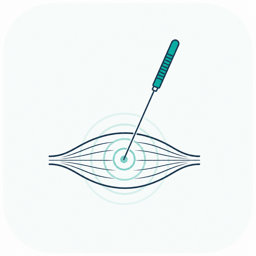
Dry Needling
For cervical spondylosis, dry needling is considered when your assessment points to a pattern that responds to it. Targeted needling for myofascial trigger points when guarding limits motion. Consent-led, and followed by movement so relief is not temporary only. At Quick Physio in Ghaziabad clinics or on home visits across Delhi NCR, we explain why this tool is in your plan — and when we will stop it if it is not helping.
Posture & Ergonomics
For cervical spondylosis, posture & ergonomics is considered when your assessment points to a pattern that responds to it. Desk, phone, sleep and commute setup coaching that survives Delhi NCR weeks — so clinic gains are not erased by Tuesday’s laptop. At Quick Physio in Ghaziabad clinics or on home visits across Delhi NCR, we explain why this tool is in your plan — and when we will stop it if it is not helping.
Home physiotherapy
Not sure if this is cervical spondylosis? Ask a senior physiotherapist first.
₹499 First session ₹499
Exercises for cervical spondylosis
These are commonly used, physiotherapist-guided exercises. Learn correct technique in an assessment before starting on your own — the wrong form can do more harm than good.
Chin Tuck
- Purpose
- Reduces forward head posture load on the cervical spine.
- How to perform
- Sitting tall, gently draw the chin straight back without tilting.
- Repetitions
- 2–3 sets of 10, held 3–5 seconds.
- Common mistakes
- Tilting the head down instead of a straight glide back.
- Who should avoid it
- Sharp increase in arm symptoms.
Neck Isometrics
- Purpose
- Builds strength safely without moving a stiff, sensitive neck through full range.
- How to perform
- Place your hand against your forehead and gently press your head into it without moving, then repeat side and back.
- Repetitions
- 5 holds of 5 seconds per direction.
- Common mistakes
- Pressing too hard, causing strain elsewhere.
- Who should avoid it
- Acute severe flare — start very gently.
Shoulder Blade Squeeze
- Purpose
- Supports the neck by improving upper back posture.
- How to perform
- Sitting tall, squeeze shoulder blades together and slightly down, then release.
- Repetitions
- 2–3 sets of 10–12.
- Common mistakes
- Shrugging shoulders instead of drawing blades back.
- Who should avoid it
- Not typically an issue for this exercise.
Thoracic Extension
- Purpose
- Improves upper back mobility, reducing compensatory neck strain.
- How to perform
- Sitting, place hands behind your head and gently arch backward over a chair edge or foam roller if available.
- Repetitions
- 8–10 gentle repetitions.
- Common mistakes
- Forcing range through the lower back instead of the upper back.
- Who should avoid it
- Osteoporosis or spinal fracture history without clearance.
Prevention tips
Maintain good desk and driving posture to reduce cumulative strain
Keep the neck gently mobile with daily movement rather than stiffening through inactivity
Build deep neck and shoulder endurance rather than relying on passive treatments alone
Address sleep pillow support if mornings are consistently stiff
Avoid sudden, forceful neck movements, especially first thing in the morning
Recovery timeline
Every recovery is different, but this is a realistic general overview for cervical spondylosis:
Ease irritability and establish safe, comfortable movement ranges.
Build endurance in postural and deep neck muscles.
Return to full desk and daily activity load with a maintained routine.
Ongoing maintenance work manages the chronic, age-related nature of this condition.
Recovery varies depending on the underlying condition, severity and how consistently the plan is followed.
Your recovery journey at Quick Physio
- Screen red flags with your history
- Ease irritable positions
- Endurance and mobility plan
- Workstation and sleep habits
Why choose Quick Physio?
cervical spondylosis in Delhi NCR life — why the week matters
Patients rarely fail cervical spondylosis recovery because they are lazy. They fail because the week keeps reloading the same tissue: desk-and-drive stiffness with grinding and morning start-up pain. Quick Physio treats that week — at home across Delhi NCR or in our Ghaziabad clinics — instead of pretending a perfect gym exists in your calendar.
Assessment names whether your pattern is primarily joint, soft-tissue, nerve-related, tendon, or deconditioning. That label decides which treatments we open first and which loads we temporarily edit.
Treatments we offer for cervical spondylosis at Quick Physio
After assessment, your cervical spondylosis plan may combine several physiotherapy treatments. We explain each choice: why it is in the plan this week, what you should feel, and when we will progress or stop it.
Home visits can deliver manual care, exercise coaching and ergonomics advice in your space. Clinic sessions at Vasundhara or Shastri Nagar add easier access to selective electrotherapy and ultrasound when indicated.
How to book a session for cervical spondylosis
Use the Book Session form at the bottom of this page, call or WhatsApp +91 7900256729, or book the ₹499 first home physiotherapy session. Mention cervical spondylosis and your locality so we match the right pathway.
Clinic first sessions are ₹199 at Vasundhara Sector 1 and Shastri Nagar. Follow-up pricing is transparent before you commit — assessment first.
Frequently asked questions
Is cervical spondylosis the same as a slipped disc?
No — spondylosis refers to age-related joint and disc changes generally, while a disc bulge is a specific structural change that may or may not be present.
Can physiotherapy reverse spondylosis?
It can’t reverse degenerative changes on a scan, but it very often meaningfully reduces symptoms and improves comfortable function.
Is neck exercise safe with spondylosis?
Yes, appropriately dosed exercise is a core, evidence-based treatment rather than something to avoid.
What treatments does Quick Physio use for cervical spondylosis?
Depending on assessment: Manual Therapy, Therapeutic Exercise, Electrotherapy (TENS / IFT), Dry Needling, Posture & Ergonomics. Selection is individual.
Can I get home physiotherapy for cervical spondylosis in Delhi NCR?
Yes. Many cervical spondylosis plans start as home visits; clinic care is available in Ghaziabad when modalities or table space help.
How do I book a session for cervical spondylosis?
Book Session form on this page, WhatsApp/call +91 7900256729, or ₹499 home offer — mention cervical spondylosis.
Is cervical spondylosis always a physiotherapy problem?
Often mechanical patterns respond well to physio, but red-flag symptoms need medical review first. We screen and refer when needed.
Will I get exercises for cervical spondylosis?
Yes — graded exercises are central. Technique is coached in session so home practice is safe and specific.
Does recovery time for cervical spondylosis vary by age and work load?
Yes. Desk-heavy NCR weeks, stair living and training history all change timelines. We set expectations after seeing your irritability and goals.
Should I stop all activity with cervical spondylosis?
Usually not. Complete rest often worsens stiffness. We adjust load and rebuild capacity instead of total shutdown — unless a doctor has ordered specific precautions.
Does recovery time for cervical spondylosis vary by age and work load?
Yes. Desk-heavy NCR weeks, stair living and training history all change timelines. We set expectations after seeing your irritability and goals.
Should I stop all activity with cervical spondylosis?
Usually not. Complete rest often worsens stiffness. We adjust load and rebuild capacity instead of total shutdown — unless a doctor has ordered specific precautions.
Related conditions
Cervical Spondylosis often overlaps with, or is confused for, these conditions — explore them if your pattern doesn’t fully match:
Related reading from our blog
Topic-cluster articles that build on this condition guide:
Cervical spondylosis home physiotherapy in Gurugram — desk necks from ₹499
Cervical spondylosis in Gurugram is rarely “just age.” It is age plus a laptop that never left the dining table and a pillow that lost the argument years ago.
Cervical spondylosis physiotherapy in Ghaziabad — when the X-ray scares your parent
Families search cervical spondylosis physiotherapy in Ghaziabad after an X-ray PDF arrives on WhatsApp. The film is not the treatment plan. The recliner, the phone, and the stair they look down are.
Cervical spondylosis patterns in Noida — dual monitors and sofa-laptop stacks
Report language sounds permanent; many mechanical necks still improve when dual-monitor reach and sofa stacks change.
Book Cervical Spondylosis physiotherapy. Home visit or clinic care across Ghaziabad & Delhi NCR — assessment first, then a plan that fits your week.
Book Assessment · +91 79002 56729 Appointment & mapEducational information only. This page does not replace medical advice, diagnosis or emergency care. Seek urgent help for red-flag symptoms described above.