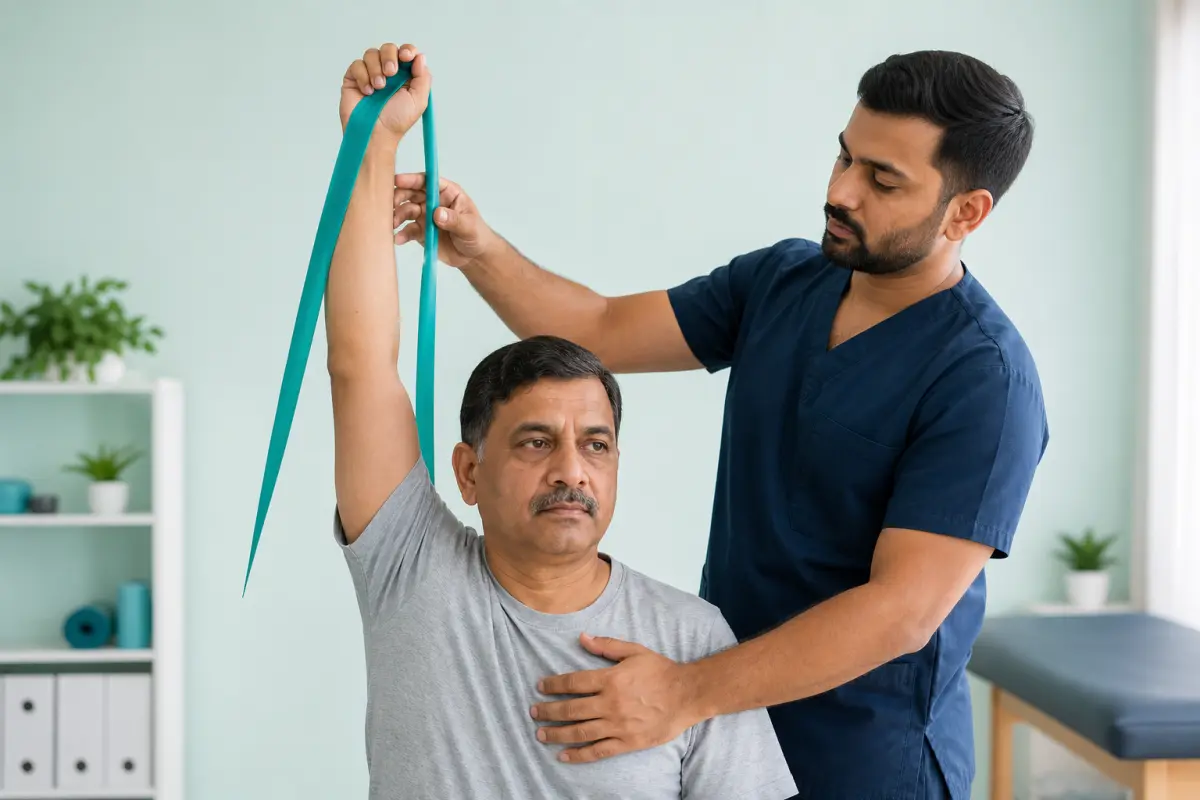

What is cervicogenic headache?
Cervicogenic headache is head pain driven mainly by neck joints, discs or muscles — often one-sided, starting at the base of the skull and referred into the head. It is distinct from migraine, though people can have both.
Why does this problem happen?
Upper cervical structures can refer pain into the head. Desk hours, driving posture and guarded neck movement after stiffness raise that referral. Treating only the temple with painkillers leaves the neck driver untouched.
What kinds of cervicogenic headache can occur?
Not every case feels the same. These are common patterns we see in clinic and home visits across Delhi NCR:
Desk-linked neck headache
Builds through screen blocks; eases with posture change.
One-sided base-of-skull start
Pain begins in the neck then climbs into the head.
Post-stiffness flare
After a wry-neck week, headaches join the stiffness.
Mixed migraine + neck pattern
Needs careful sorting — neck load still worth treating.
Common causes & triggers
These are frequent reasons cervicogenic headache starts or keeps returning:
- Prolonged forward-head desk and phone posture
- Sudden neck strain or awkward sleep position
- Upper cervical joint irritability
- Weak deep neck and scapular endurance
- Stress-related upper-trap and jaw guarding
Risk factors — who is more at risk?
These factors don’t guarantee cervicogenic headache, but they raise the odds and are worth addressing alongside treatment:
- Long screen hours
- NCR commute driving
- Prior neck injury
- Poor pillow support
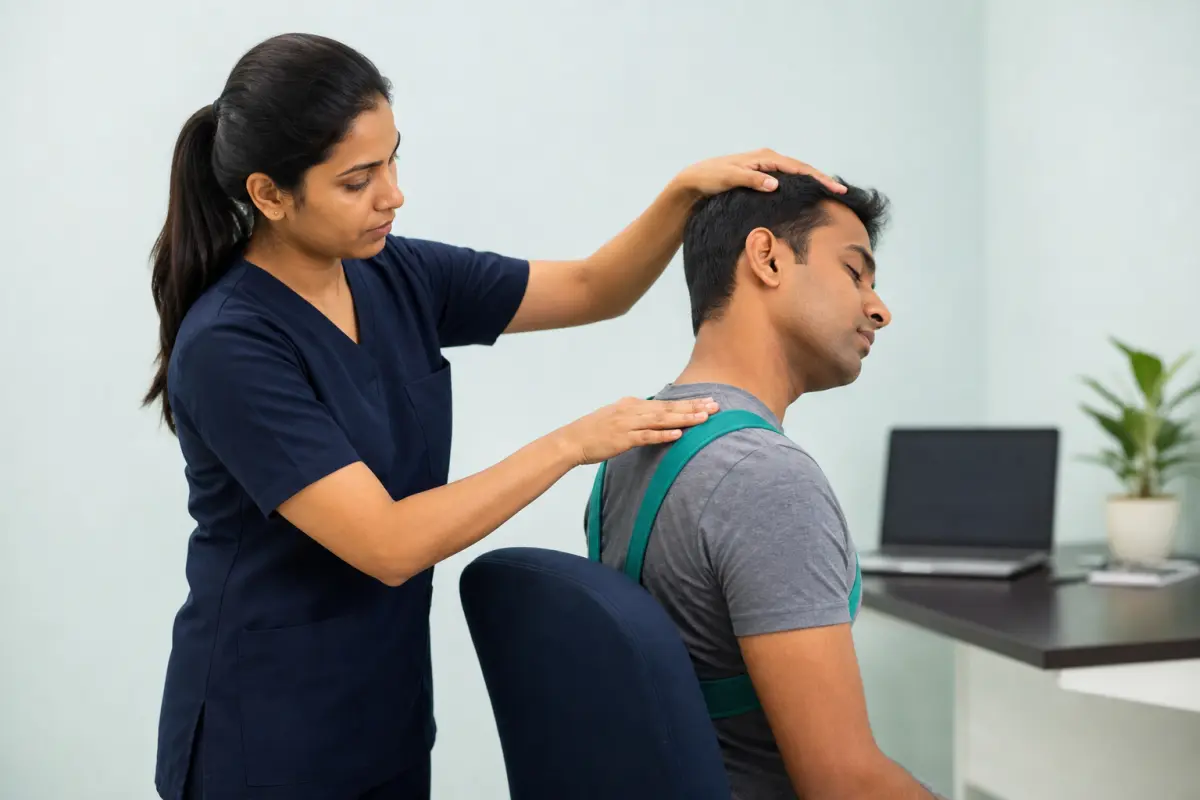
Recognise your pattern? A clear assessment is faster than guessing exercises from the internet.
Call +91 79002 56729 WhatsApp usSigns & symptoms
- Head pain that starts with neck stiffness
- One-sided headache after screen or driving hours
- Pain with looking up, turning or sustained posture
- Tenderness at the base of the skull or upper neck
Head pain starting from the neck
Pain begins at the upper neck or skull base and refers into the head — often one-sided.
Screen-hour build-up
Symptoms climb through laptop or phone blocks and ease when the neck moves or posture changes.
Pain with looking up or turning
Cervical motion reproduces or eases the head pain pattern.
Tenderness at the upper neck
Local joint or muscle irritability at C0–C3 levels is common on assessment.
Desk-day headache without migraine aura
No classic migraine warning lights — the story tracks posture and neck stiffness.
When should you see a physiotherapist?
Book when headaches track with neck posture or movement. Seek urgent medical care for sudden worst-ever headache, neurological change, fever with stiff neck, or head injury.
Seek urgent medical attention for bowel/bladder changes, rapidly worsening weakness, unexplained weight loss, fever, or symptoms following major trauma — these are emergency signs, not routine physiotherapy concerns.
How physiotherapy helps
We separate neck-driven patterns from migraine/medical red flags, restore cervical motion, rebuild deep neck and scapular endurance, and fix the desk load that keeps restarting symptoms.
- Separate neck-driven from medical red flags: Sudden worst headache, neurological change or fever patterns are escalated — physiotherapy treats mechanical neck drivers.
- Restore comfortable cervical motion: Guided mobility reduces the guarding that keeps referring pain into the head.
- Deep neck and scapular endurance: Capacity for screen hours matters more than a one-off stretch.
- Desk and pillow load changes: Monitor height, breaks and sleep support stop weekly restart cycles.
Treatments we may use for cervicogenic headache
Based on your assessment, your plan may include one or more of these physiotherapy treatments:
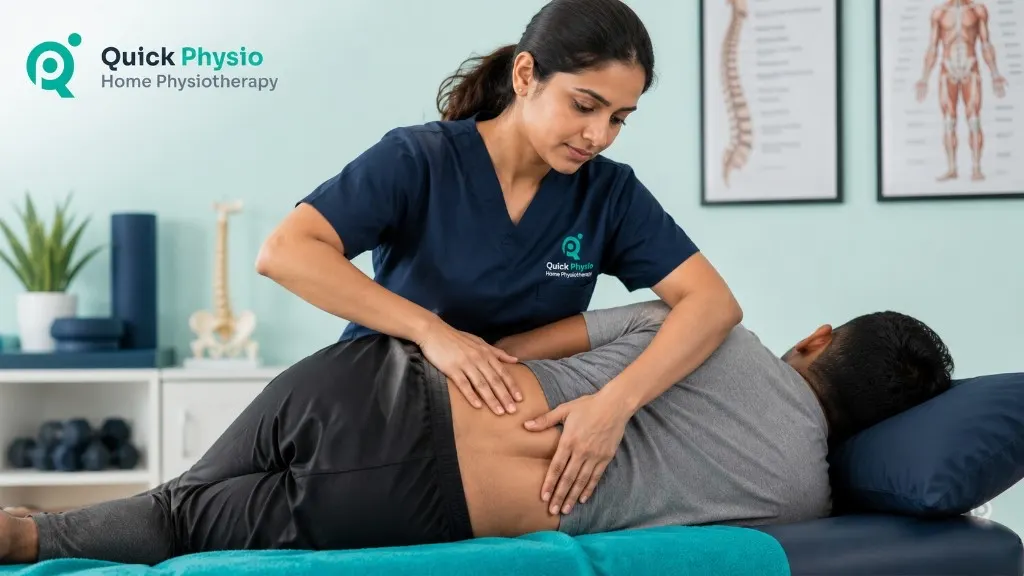
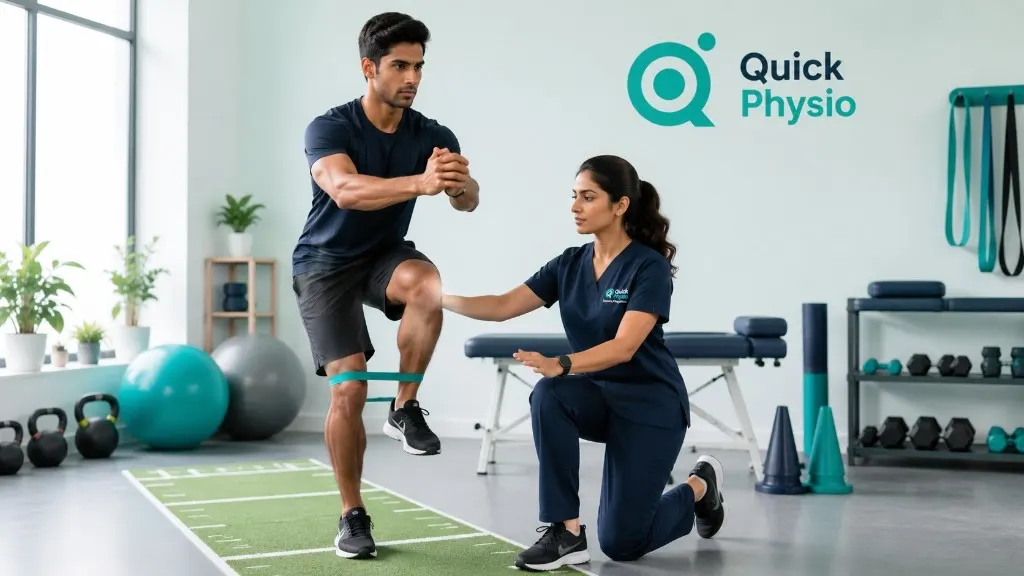
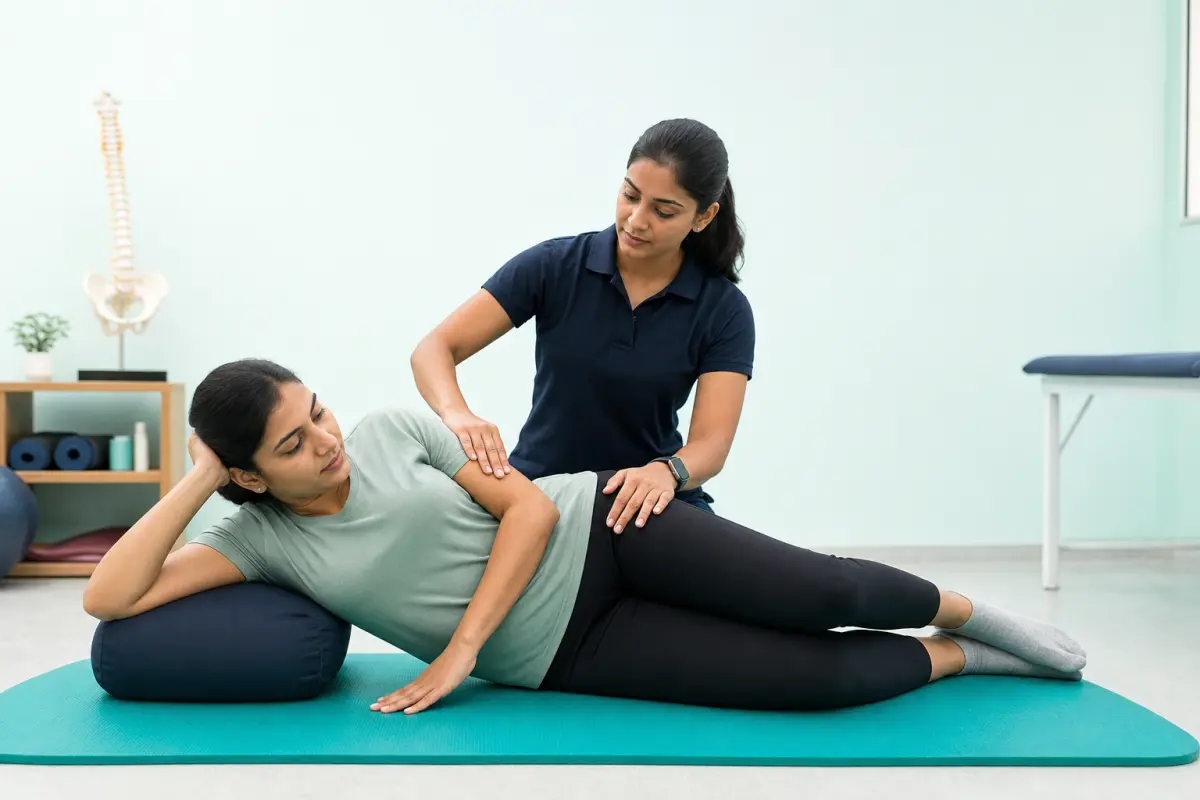
Treatments we offer for cervicogenic headache
Quick Physio does not run a one-modality clinic. After assessment, your plan for cervicogenic headache may combine several of these treatments — chosen for your irritability, goals and whether you are seen at home or in our Ghaziabad clinics.
Manual Therapy
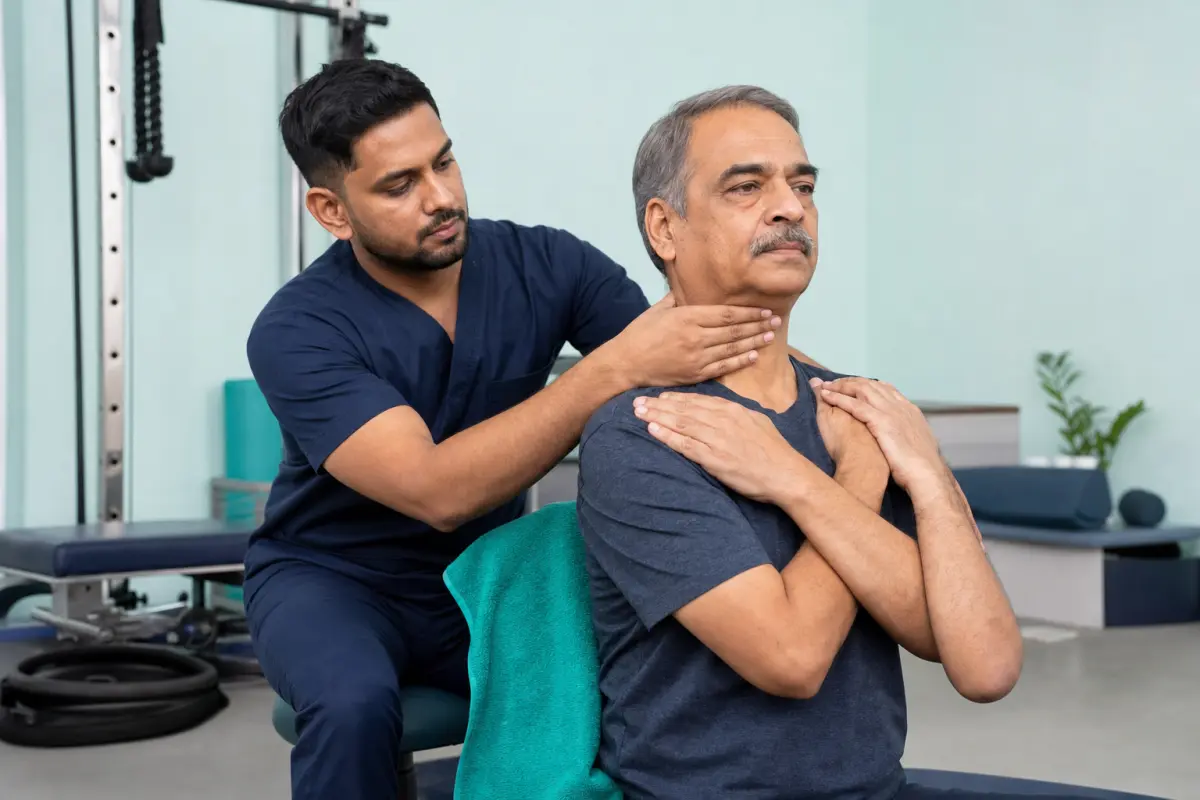
For cervicogenic headache, manual therapy is considered when your assessment points to a pattern that responds to it. Hands-on joint and soft-tissue techniques to ease stiffness and protective guarding so you can move into exercise sooner. Used when irritability allows — never as a crack-everything ritual. At Quick Physio in Ghaziabad clinics or on home visits across Delhi NCR, we explain why this tool is in your plan — and when we will stop it if it is not helping.
Therapeutic Exercise
For cervicogenic headache, therapeutic exercise is considered when your assessment points to a pattern that responds to it. Graded strength, control and mobility drills matched to your capacity. This is the backbone of lasting change for almost every mechanical and post-op plan. At Quick Physio in Ghaziabad clinics or on home visits across Delhi NCR, we explain why this tool is in your plan — and when we will stop it if it is not helping.
Posture & Ergonomics
For cervicogenic headache, posture & ergonomics is considered when your assessment points to a pattern that responds to it. Desk, phone, sleep and commute setup coaching that survives Delhi NCR weeks — so clinic gains are not erased by Tuesday’s laptop. At Quick Physio in Ghaziabad clinics or on home visits across Delhi NCR, we explain why this tool is in your plan — and when we will stop it if it is not helping.
Soft Tissue Mobilization
For cervicogenic headache, soft tissue mobilization is considered when your assessment points to a pattern that responds to it. Hands-on work on muscle and fascia that are over-guarding. Helps restore comfortable glide before endurance training starts. At Quick Physio in Ghaziabad clinics or on home visits across Delhi NCR, we explain why this tool is in your plan — and when we will stop it if it is not helping.
Dry Needling
For cervicogenic headache, dry needling is considered when your assessment points to a pattern that responds to it. Targeted needling for myofascial trigger points when guarding limits motion. Consent-led, and followed by movement so relief is not temporary only. At Quick Physio in Ghaziabad clinics or on home visits across Delhi NCR, we explain why this tool is in your plan — and when we will stop it if it is not helping.
Home physiotherapy
Not sure if this is cervicogenic headache? Ask a senior physiotherapist first.
₹1000 First session ₹499
Exercises for cervicogenic headache
These are commonly used, physiotherapist-guided exercises. Learn correct technique in an assessment before starting on your own — the wrong form can do more harm than good.
Chin Tuck (Gentle)
- Purpose
- Activates deep neck flexors that support upright screen posture.
- How to perform
- Sitting tall, glide the chin straight back without nodding down, hold briefly, relax.
- Repetitions
- 2 sets of 8–10 holds of 3–5 seconds.
- Common mistakes
- Tucking by looking down hard.
- Who should avoid it
- Sharp arm symptoms — stop and reassess.
Seated Cervical Rotation (Comfort Range)
- Purpose
- Restores turning without forcing clicks.
- How to perform
- Turn to look over one shoulder within comfort, pause, return, switch sides.
- Repetitions
- 8–10 slow turns each side.
- Common mistakes
- Forcing range through sharp head pain.
- Who should avoid it
- Acute post-trauma without medical clearance.
Scapular Squeeze
- Purpose
- Shares load away from upper traps and neck.
- How to perform
- Gently draw shoulder blades back and down, hold, release.
- Repetitions
- 2 sets of 10.
- Common mistakes
- Shrugging ears toward shoulders.
- Who should avoid it
- Not usually restricted.
Upper Trap Stretch (Gentle)
- Purpose
- Eases guarding that feeds base-of-skull tension.
- How to perform
- Sit tall, tilt ear toward shoulder gently, optional light hand assist.
- Repetitions
- Hold 20 seconds, 2 each side.
- Common mistakes
- Pulling hard into tingling.
- Who should avoid it
- Acute nerve symptoms into the arm.
Prevention tips
Raise screens so you are not looking down for hours
Take a 1–2 minute neck and shoulder break each hour
Avoid self-cracking as your only “treatment”
Choose a pillow height that keeps the neck neutral
Train deep neck and scapular endurance 3–4 days weekly
Recovery timeline
Every recovery is different, but this is a realistic general overview for cervicogenic headache:
Calm irritability and restore comfortable turning.
Build endurance and lock in desk changes.
Headache frequency usually drops as neck capacity rises.
Maintenance breaks and strength keep NCR desk weeks quieter.
Recovery varies depending on the underlying condition, severity and how consistently the plan is followed.
Your recovery journey at Quick Physio
- History and red-flag screen
- Neck movement and posture assessment
- Hands-on mobility plus endurance exercise
- Screen, pillow and break plan for NCR weeks
Why choose Quick Physio?
cervicogenic headache in Delhi NCR life — why the week matters
Patients rarely fail cervicogenic headache recovery because they are lazy. They fail because the week keeps reloading the same tissue: neck-driven head pain after dual-monitor and driving hours. Quick Physio treats that week — at home across Delhi NCR or in our Ghaziabad clinics — instead of pretending a perfect gym exists in your calendar.
Assessment names whether your pattern is primarily joint, soft-tissue, nerve-related, tendon, or deconditioning. That label decides which treatments we open first and which loads we temporarily edit.
Treatments we offer for cervicogenic headache at Quick Physio
After assessment, your cervicogenic headache plan may combine several physiotherapy treatments. We explain each choice: why it is in the plan this week, what you should feel, and when we will progress or stop it.
Home visits can deliver manual care, exercise coaching and ergonomics advice in your space. Clinic sessions at Vasundhara or Shastri Nagar add easier access to selective electrotherapy and ultrasound when indicated.
How to book a session for cervicogenic headache
Use the Book Session form at the bottom of this page, call or WhatsApp +91 7900256729, or book the ₹499 first home physiotherapy session. Mention cervicogenic headache and your locality so we match the right pathway.
Clinic first sessions are ₹199 at Vasundhara Sector 1 and Shastri Nagar. Follow-up pricing is transparent before you commit — assessment first.
Frequently asked questions
How is cervicogenic headache different from migraine?
Migraine is a neurological condition; cervicogenic headache is driven mainly by neck joints and muscles. Many people have mixed patterns — assessment sorts which load to treat first.
Can physiotherapy cure migraines?
Migraine is medical/neurological. Physio helps when neck load is a clear trigger or companion — we do not claim to “cure migraine.”
Will cracking my neck fix the headache?
Self-cracking is not a plan. Assessed techniques plus exercise change the driver more reliably.
Do I need an MRI first?
Often no for typical mechanical patterns. Imaging follows medical advice when red flags or stalled progress appear.
Can I get treatment at home in Ghaziabad?
Yes — home visits help when we need to see your WFH setup and pillow arrangement.
What treatments does Quick Physio use for cervicogenic headache?
Depending on assessment: Manual Therapy, Therapeutic Exercise, Posture & Ergonomics, Soft Tissue Mobilization, Dry Needling. Selection is individual.
Can I get home physiotherapy for cervicogenic headache in Delhi NCR?
Yes. Many cervicogenic headache plans start as home visits; clinic care is available in Ghaziabad when modalities or table space help.
How do I book a session for cervicogenic headache?
Book Session form on this page, WhatsApp/call +91 7900256729, or ₹499 home offer — mention cervicogenic headache.
Is cervicogenic headache always a physiotherapy problem?
Often mechanical patterns respond well to physio, but red-flag symptoms need medical review first. We screen and refer when needed.
Will I get exercises for cervicogenic headache?
Yes — graded exercises are central. Technique is coached in session so home practice is safe and specific.
Does recovery time for cervicogenic headache vary by age and work load?
Yes. Desk-heavy NCR weeks, stair living and training history all change timelines. We set expectations after seeing your irritability and goals.
Should I stop all activity with cervicogenic headache?
Usually not. Complete rest often worsens stiffness. We adjust load and rebuild capacity instead of total shutdown — unless a doctor has ordered specific precautions.
Does recovery time for cervicogenic headache vary by age and work load?
Yes. Desk-heavy NCR weeks, stair living and training history all change timelines. We set expectations after seeing your irritability and goals.
Related conditions
Cervicogenic Headache often overlaps with, or is confused for, these conditions — explore them if your pattern doesn’t fully match:
Related reading from our blog
Topic-cluster articles that build on this condition guide:
Home physiotherapy in Lower Parel for corporate desk pain — mill-land towers, ten-hour calendars and the headache that starts in your neck
Lower Parel's towers run on ten-hour calendars with no gap between meetings, and the commonest thing I am called for is not back pain — it is a one-sided headache that starts at the base of the skull around four in the afternoon and is blamed on screens.
Cervicogenic headache from desk neck — home physiotherapy in Delhi NCR
When headache starts from the neck and follows laptop posture, home physio treats the cervical drivers — while screening headaches that need medical care.
Book Cervicogenic Headache physiotherapy. Home visit or clinic care across Ghaziabad & Delhi NCR — assessment first, then a plan that fits your week.
Book Assessment · +91 79002 56729 Appointment & mapEducational information only. This page does not replace medical advice, diagnosis or emergency care. Seek urgent help for red-flag symptoms described above.