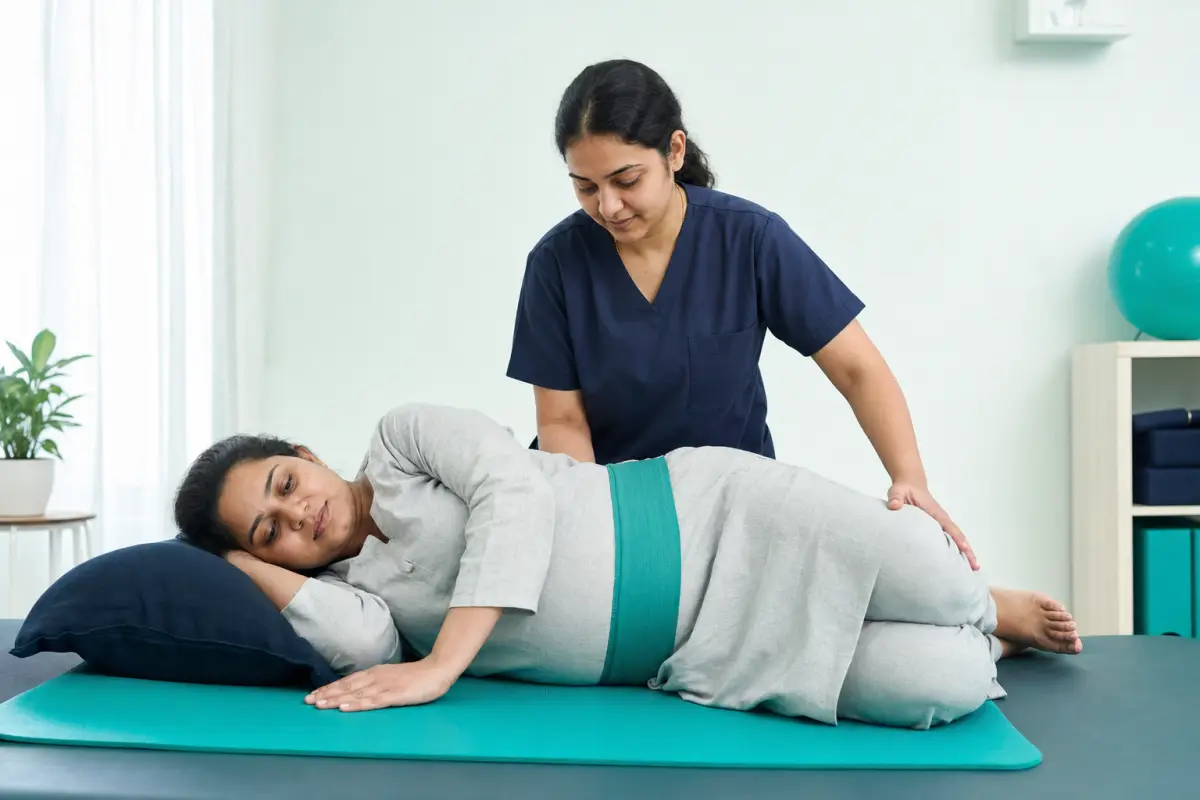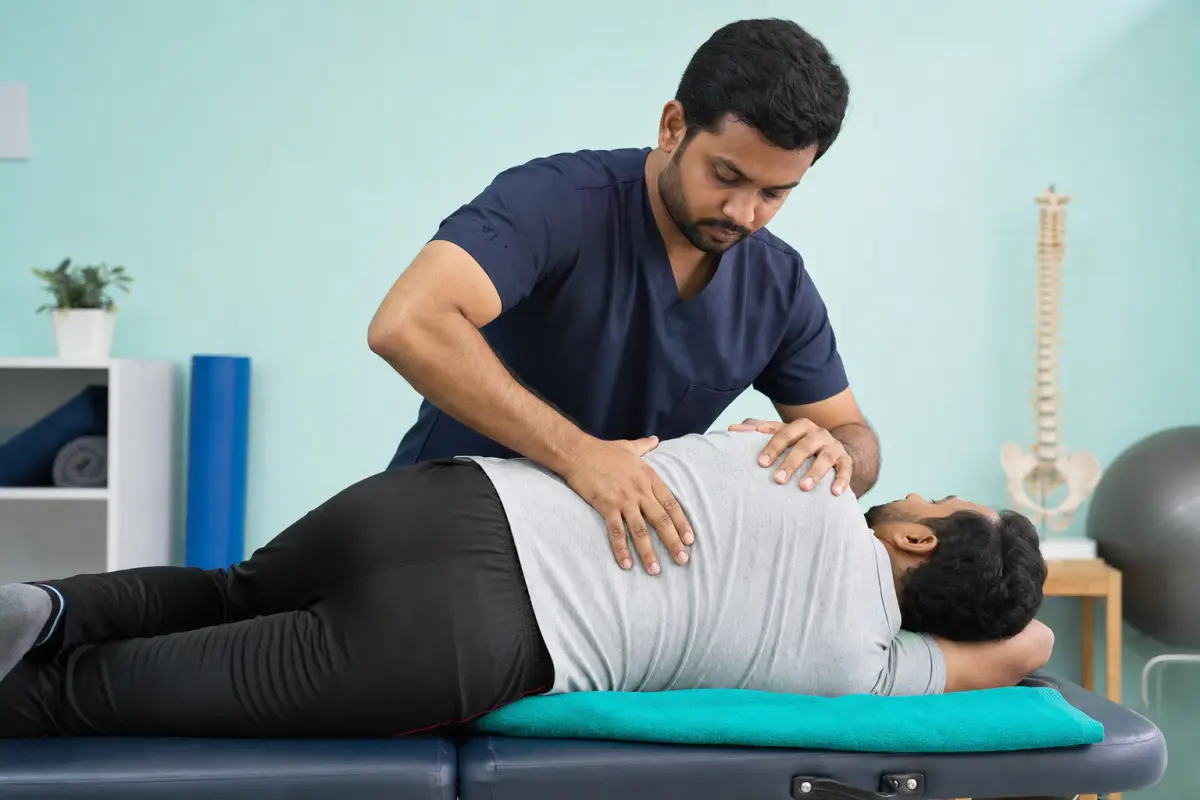
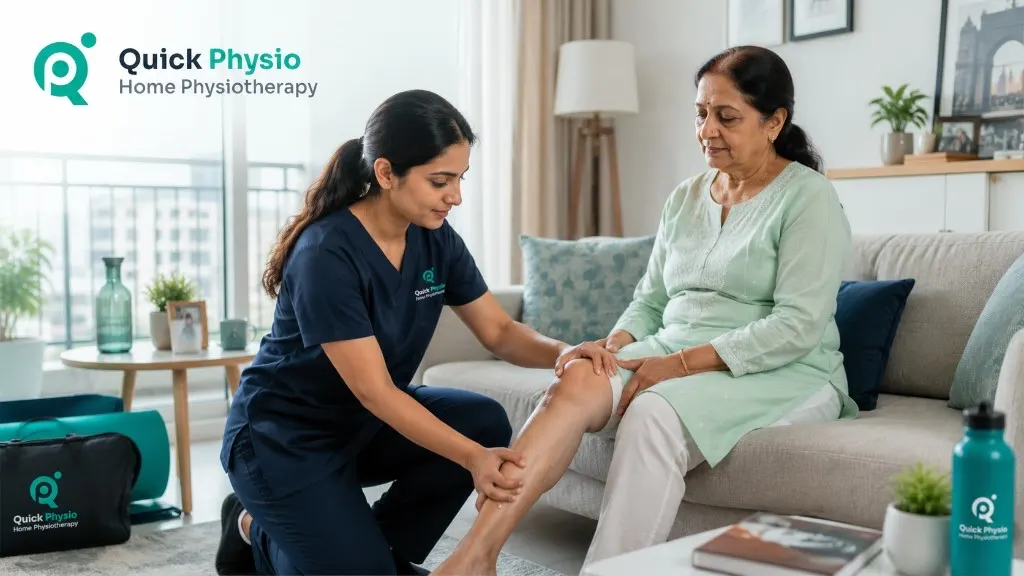

What is pelvic floor concerns?
Pelvic floor concerns include leakage with cough or exercise, a feeling of heaviness, or uncertainty about when to tighten vs relax the pelvic floor. These muscles support bladder, bowel and pelvic organs — and they work with breath and posture.
Why does this problem happen?
Pregnancy, birth, chronic straining, high-impact sport or simply never learning coordination can leave the pelvic floor either under-active or over-gripping. Endless Kegels without assessment can worsen some patterns — education comes first.

What kinds of pelvic floor concerns can occur?
Not every case feels the same. These are common patterns we see in clinic and home visits across Delhi NCR:
Stress leakage pattern
Leak with cough, sneeze, laugh or jump.
Urgency-related concerns
Sudden need to go — medical + physio teamwork helps.
Heaviness / pressure feeling
Needs medical screening plus supportive physio education.
Over-holding / tension pattern
Difficulty relaxing — not fixed by more squeezing.
Common causes & triggers
These are frequent reasons pelvic floor concerns starts or keeps returning:
- Pregnancy and childbirth
- Chronic constipation or straining
- High-impact exercise without gradual return
- Chronic cough
- Postural holding and breath-holding under load
- Postnatal return to sport too quickly
Risk factors — who is more at risk?
These factors don’t guarantee pelvic floor concerns, but they raise the odds and are worth addressing alongside treatment:
- Pregnancy and postpartum period
- Heavy lifting jobs
- Chronic constipation
- High-impact sports
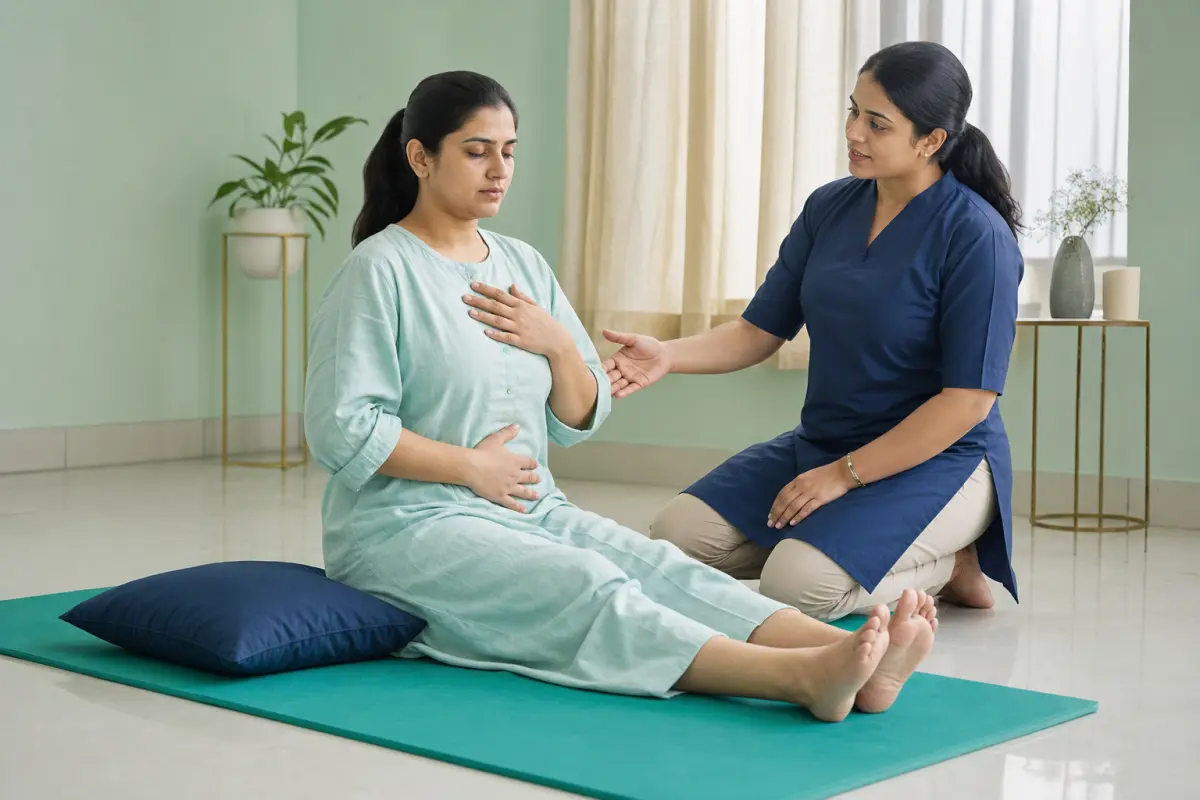
Recognise your pattern? A clear assessment is faster than guessing exercises from the internet.
Call +91 79002 56729 WhatsApp usSigns & symptoms
- Leakage with cough, sneeze or exercise
- Feeling of heaviness or pressure
- Uncertainty about when to squeeze or relax
- Postnatal return-to-exercise nerves
When should you see a physiotherapist?
Discuss symptoms with your doctor and book physio for guided education. Sudden severe pain or unexplained bleeding needs medical care first.
Seek urgent medical attention for bowel/bladder changes, rapidly worsening weakness, unexplained weight loss, fever, or symptoms following major trauma — these are emergency signs, not routine physiotherapy concerns.
How physiotherapy helps
We teach coordination — not just endless Kegels — and integrate breath, posture and daily habits. Care is private, paced and non-judgemental.
Treatments we may use for pelvic floor concerns
Based on your assessment, your plan may include one or more of these physiotherapy treatments:

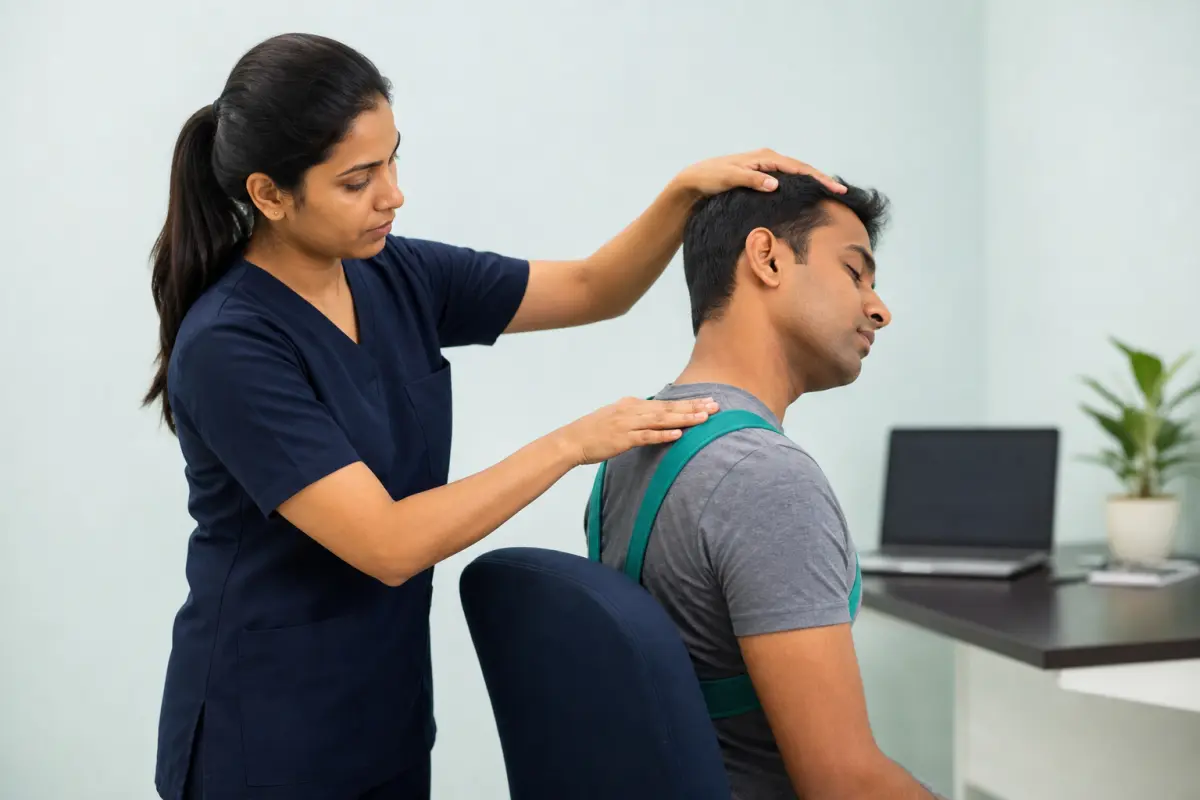
Treatments we offer for pelvic floor concerns
Quick Physio does not run a one-modality clinic. After assessment, your plan for pelvic floor concerns may combine several of these treatments — chosen for your irritability, goals and whether you are seen at home or in our Ghaziabad clinics.
Pelvic Floor Therapy
For pelvic floor, pelvic floor therapy is considered when your assessment points to a pattern that responds to it. Respectful education and training for coordination — when to engage and when to relax — often linked with prenatal/postnatal pathways. At Quick Physio in Ghaziabad clinics or on home visits across Delhi NCR, we explain why this tool is in your plan — and when we will stop it if it is not helping.
Therapeutic Exercise
For pelvic floor, therapeutic exercise is considered when your assessment points to a pattern that responds to it. Graded strength, control and mobility drills matched to your capacity. This is the backbone of lasting change for almost every mechanical and post-op plan. At Quick Physio in Ghaziabad clinics or on home visits across Delhi NCR, we explain why this tool is in your plan — and when we will stop it if it is not helping.
Posture & Ergonomics
For pelvic floor, posture & ergonomics is considered when your assessment points to a pattern that responds to it. Desk, phone, sleep and commute setup coaching that survives Delhi NCR weeks — so clinic gains are not erased by Tuesday’s laptop. At Quick Physio in Ghaziabad clinics or on home visits across Delhi NCR, we explain why this tool is in your plan — and when we will stop it if it is not helping.
Home physiotherapy
Not sure if this is pelvic floor concerns? Ask a senior physiotherapist first.
₹499 First session ₹499
Exercises for pelvic floor concerns
These are commonly used, physiotherapist-guided exercises. Learn correct technique in an assessment before starting on your own — the wrong form can do more harm than good.
Guided Pelvic Floor Contraction
- Purpose
- Builds awareness and coordination of pelvic floor engagement.
- How to perform
- In a comfortable seated position, gently lift and squeeze as though stopping the flow of urine, then fully relax.
- Repetitions
- 2 sets of 8–10, always paired with a full relax.
- Common mistakes
- Holding your breath or gripping your buttocks and thighs instead of the pelvic floor.
- Who should avoid it
- Doing this excessively without guidance — technique matters more than repetitions.
Diaphragmatic Breathing with Pelvic Floor Coordination
- Purpose
- Links breath with pelvic floor relaxation and gentle engagement.
- How to perform
- Lying comfortably, breathe into your belly, allowing the pelvic floor to soften on the inhale and gently lift on the exhale.
- Repetitions
- 5–8 slow breaths, 1–2 times daily.
- Common mistakes
- Forcing the pelvic floor to stay tight throughout.
- Who should avoid it
- Not applicable for most — a very gentle, safe starting exercise.
Bridge with Pelvic Floor Engagement
- Purpose
- Integrates pelvic floor activation into a functional movement.
- How to perform
- Lying with knees bent, gently engage the pelvic floor, then lift hips into a bridge, lower slowly.
- Repetitions
- 2 sets of 8–10.
- Common mistakes
- Bearing down instead of lifting.
- Who should avoid it
- Early postnatal without clearance — check with your physiotherapist first.
Deep Squat Hold
- Purpose
- Encourages healthy pelvic floor lengthening and relaxation.
- How to perform
- Holding support, lower into a comfortable deep squat, relax the pelvic floor fully, and hold.
- Repetitions
- 3–5 holds of 15–20 seconds.
- Common mistakes
- Gripping the pelvic floor instead of letting it relax.
- Who should avoid it
- Significant pelvic organ prolapse symptoms without guidance.
Prevention tips
Avoid habitually holding your breath and bearing down during lifting
Manage constipation with fibre, fluids and good toilet posture
Progress return to high-impact exercise gradually after birth
Address a persistent cough promptly rather than letting it linger
Learn coordination, not just squeezing — over-gripping can be as unhelpful as weakness
Recovery timeline
Every recovery is different, but this is a realistic general overview for pelvic floor concerns:
Understanding correct engagement and relaxation is the essential first step, often within the first 1–2 sessions.
Functional integration into daily tasks like lifting, coughing and exercise begins.
Return to higher-impact activity is guided progressively, particularly postnatally.
Pelvic floor health is maintained long-term, not treated as a one-time fix.
Recovery varies depending on the underlying condition, severity and how consistently the plan is followed.
Your recovery journey at Quick Physio
- History and goal setting
- Education on squeeze vs relax
- Functional practice (lift, walk, cough)
- Link to prenatal or postnatal plans
Why choose Quick Physio?
pelvic floor in Delhi NCR life — why the week matters
Patients rarely fail pelvic floor recovery because they are lazy. They fail because the week keeps reloading the same tissue: pregnancy and postnatal coordination — engage vs relax without intimidation. Quick Physio treats that week — at home across Delhi NCR or in our Ghaziabad clinics — instead of pretending a perfect gym exists in your calendar.
Assessment names whether your pattern is primarily joint, soft-tissue, nerve-related, tendon, or deconditioning. That label decides which treatments we open first and which loads we temporarily edit.
Treatments we offer for pelvic floor at Quick Physio
After assessment, your pelvic floor plan may combine several physiotherapy treatments. We explain each choice: why it is in the plan this week, what you should feel, and when we will progress or stop it.
Home visits can deliver manual care, exercise coaching and ergonomics advice in your space. Clinic sessions at Vasundhara or Shastri Nagar add easier access to selective electrotherapy and ultrasound when indicated.
How to book a session for pelvic floor
Use the Book Session form at the bottom of this page, call or WhatsApp +91 7900256729, or book the ₹499 first home physiotherapy session. Mention pelvic floor and your locality so we match the right pathway.
Clinic first sessions are ₹199 at Vasundhara Sector 1 and Shastri Nagar. Follow-up pricing is transparent before you commit — assessment first.
Frequently asked questions
Are Kegels enough to fix pelvic floor issues?
Not always — some patterns involve an over-tight pelvic floor that needs relaxation work rather than more squeezing, which is why assessment matters.
Is leakage with exercise normal?
It’s common but not something you have to just live with — targeted pelvic floor physiotherapy can meaningfully help.
When can I start pelvic floor exercises after birth?
Gentle awareness work can often begin early; your physiotherapist will guide timing based on your delivery and recovery.
What treatments does Quick Physio use for pelvic floor?
Depending on assessment: Pelvic Floor Therapy, Therapeutic Exercise, Posture & Ergonomics. Selection is individual.
Can I get home physiotherapy for pelvic floor in Delhi NCR?
Yes. Many pelvic floor plans start as home visits; clinic care is available in Ghaziabad when modalities or table space help.
How do I book a session for pelvic floor?
Book Session form on this page, WhatsApp/call +91 7900256729, or ₹499 home offer — mention pelvic floor.
Is pelvic floor always a physiotherapy problem?
Often mechanical patterns respond well to physio, but red-flag symptoms need medical review first. We screen and refer when needed.
Will I get exercises for pelvic floor?
Yes — graded exercises are central. Technique is coached in session so home practice is safe and specific.
Does recovery time for pelvic floor vary by age and work load?
Yes. Desk-heavy NCR weeks, stair living and training history all change timelines. We set expectations after seeing your irritability and goals.
Should I stop all activity with pelvic floor?
Usually not. Complete rest often worsens stiffness. We adjust load and rebuild capacity instead of total shutdown — unless a doctor has ordered specific precautions.
Does recovery time for pelvic floor vary by age and work load?
Yes. Desk-heavy NCR weeks, stair living and training history all change timelines. We set expectations after seeing your irritability and goals.
Should I stop all activity with pelvic floor?
Usually not. Complete rest often worsens stiffness. We adjust load and rebuild capacity instead of total shutdown — unless a doctor has ordered specific precautions.
Related conditions
Pelvic Floor Concerns often overlaps with, or is confused for, these conditions — explore them if your pattern doesn’t fully match:
Related reading from our blog
Topic-cluster articles that build on this condition guide:
Book Pelvic Floor physiotherapy. Home visit or clinic care across Ghaziabad & Delhi NCR — assessment first, then a plan that fits your week.
Book Assessment · +91 79002 56729 Appointment & mapEducational information only. This page does not replace medical advice, diagnosis or emergency care. Seek urgent help for red-flag symptoms described above.