
Home physiotherapy
When I actually want you to start
Start when pain or heaviness is changing how you walk, turn in bed, or climb the society stairs — not when a reel says every pregnant woman needs ‘prenatal yoga with a physio’. If you are comfortable and cleared for walking, you may not need us yet.
Pelvic girdle pain that catches on getting out of a Vasundhara car, pubic pain on turning in bed, or a back that locks after WFH on a dining chair — those are the weeks home physiotherapy earns the visit. Waiting until month eight because ‘it is normal in pregnancy’ is how people arrive unable to roll.
If your gynaecologist has restricted positions, bleeding, placenta previa, or other obstetric red flags, that letter leads. We do not override it with a mobilisation because a blog said physiotherapy is always safe.
First trimester nausea is a reason to keep sessions short and home-based. Third trimester hip width and breathlessness are reasons to skip floor circuits that look good on Instagram.
What hurts — and what it usually is not
Round ligament twinges with standing are common and often need pacing, not drama. True pelvic girdle pain is a load problem: walking, single-leg stance, rolling. SI-region pain after a day of standing in a kitchen is not automatically a ‘dislocated pelvis’ that someone must crack.
Rib flare and thoracic stiffness from desk-plus-belly show up a lot in Indirapuram WFH pregnancies. We treat the sitting pattern and the thoracic cage, not a story that the baby is ‘stuck on a nerve’.
Leakage, heaviness and pelvic-floor questions belong in a careful screen. They are not a cue for aggressive internal work on a first home visit without consent, privacy and a reason. Many people only need load advice and positions for sleep.
Sciatica-like leg symptoms in pregnancy still get a red-flag screen. Pregnancy does not make cauda equina disappear as a concept.
- Pelvic girdle and pubic pain with walking or rolling
- Low back irritability after long sits
- Rib and mid-back stiffness from desk-plus-bump
- Pelvic-floor symptoms handled with clear boundaries
Positions and techniques we use — and skip — by trimester
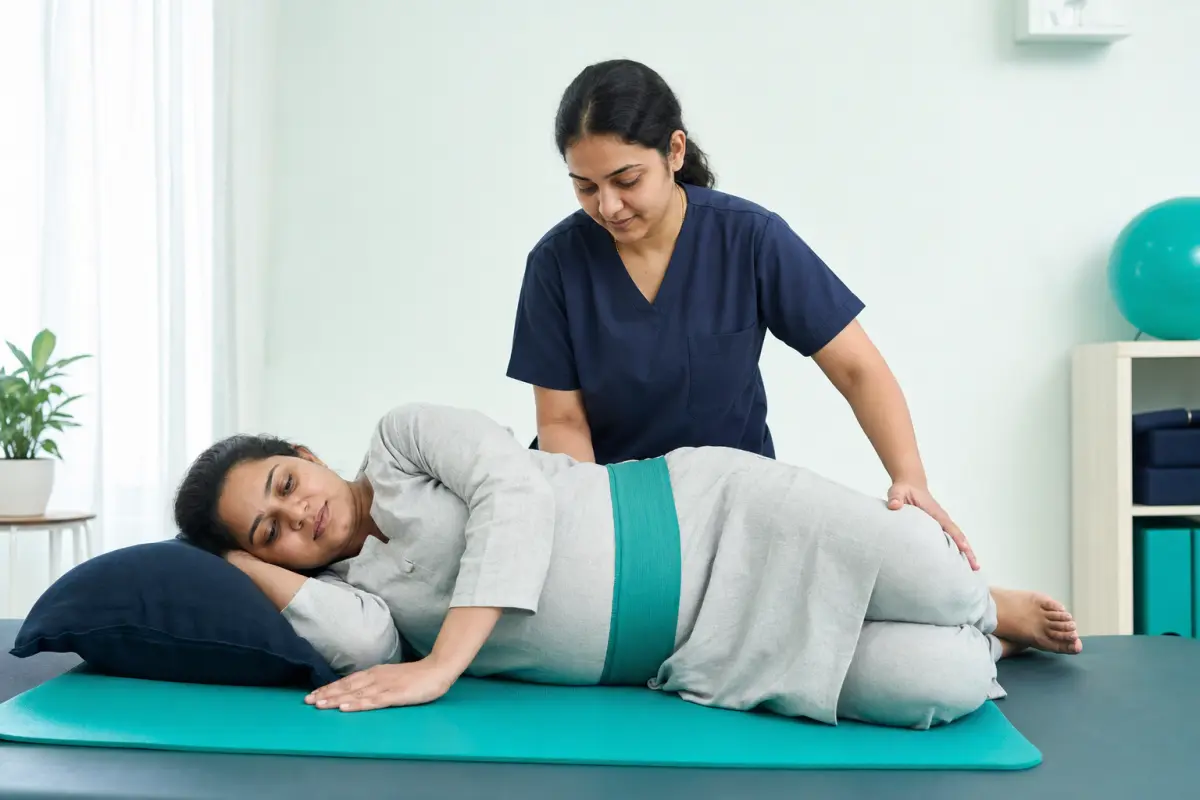
Supine lying for long periods is often a bad idea later in pregnancy. We use side-lying, sitting, and standing options. If a technique needs you flat on your back, we adapt or we do not do it.
Hands-on work is lighter when ligaments are more lax. ‘Go harder, you are pregnant and tough’ is not a method. Consent is continuous; a relative in the room does not get to decide your pain.
Exercise is short: sit-to-stand control, pelvic-friendly walking dose, thoracic mobility that does not yank the lumbar spine, and breathing that is not a performance. We do not run bootcamps in third trimester living rooms.
If you already attend a hospital antenatal class, tell us. We will not duplicate five conflicting pelvic tilts. We will fit around what you are already doing.
Home visit versus the weekend prenatal program
A standard prenatal home session (first visit) is for the woman who cannot face another auto to Sector 1, or whose pain is tied to this flat’s bed height and sofa. That is musculoskeletal physiotherapy at the door.
The 12-week weekend prenatal program is a separate event product — labour-readiness, pelvic floor education, group timing. The event page is the source for that lane.
Clinic at Vasundhara remains available if you want a private room and can travel without a flare. Pregnancy does not automatically force home, but many families choose it for nap windows and toilets they trust.
Partners can watch the home programme. They should not demonstrate a ‘fix’ they saw on YouTube on your pelvis when we leave.
Ghaziabad practicalities: heat, lifts, and family advice
May–June heat plus a third-trimester walk is a dose, not a morale test. We set walking in corridors and cooler hours, not a ‘5 km every morning’ fantasy copied from a cooler city.
Tower living: if the lift is unreliable, stair strategy is part of the plan. I would rather you do two flights well than six flights because a relative said exercise is mandatory.
Unsolicited oil massages from family, belt gadgets, and ‘complete bed rest’ without obstetric instruction are the three home hazards I spend the most time undoing. Bring them up. We will say what to pause.
Book with your obstetric constraints in one line. It saves a wasted visit.
When to call the doctor first, not the physiotherapist
Vaginal bleeding, reduced fetal movement, severe headache with visual change, calf swelling that looks like DVT, chest pain, or contractions that are not Braxton-Hicks as explained by your obstetric team — those are medical, today.
Physiotherapy after that clearance can still help musculoskeletal pain. Sequence matters. Ego does not.
If you are unsure, call your obstetric clinic first. I would rather a false alarm than a delayed one.
The week after a useful prenatal session
You should know which turn-in-bed strategy to use tonight, how far to walk in this heat, and which relative advice to ignore. If you only remember ‘do kegels 100 times’, we oversimplified and you will either drop it or overdo it.
Pelvic girdle days need pacing: shorter supermarket trips, a rest after stairs, and no proving you can still squat like month two. Pride is not a trimester plan.
If pain migrates into a calf with swelling, or you lose fetal movement awareness as your obstetric team defined it, you do not wait for the next physio slot. You call them.
Book the next visit against a real task — rolling, a family function, a scan day that involves sitting — not against a round number of sessions. Pregnancy weeks are already numbered. If the next obstetric appointment is a long sit in a waiting hall, that sit is part of the plan, not an afterthought.
FAQs
When should I start prenatal physiotherapy in Ghaziabad?
When pain or heaviness changes walking, rolling or stairs — and after you have followed any obstetric restrictions. Comfortable pregnancies do not need a physio as a default accessory.
Is prenatal physiotherapy safe in the first trimester?
With obstetric guidance when needed, we keep sessions short, avoid risky positions, and skip aggressive techniques. Nausea often makes home the kinder format.
How is this different from the Quick Physio weekend prenatal program?
Home is a standard one-to-one musculoskeletal session. Do not treat them as the same product.
Can my husband stay in the room?
If you want that, yes. If you need privacy for pelvic-floor discussion, say so at the start so we are not negotiating mid-session.
Do you do internal pelvic floor examination at home?
Not as a default on a first noisy living-room visit. Many prenatal problems need load and position changes first. Internal work, if ever indicated, needs consent, indication and an appropriate setting.
Can I continue prenatal physiotherapy after delivery?
Postnatal care is a different load problem — abdominal recovery, wrist pain from lifting, sleep positions. We reassess rather than continuing the pregnancy programme on autopilot. Book it as a new goal, not a leftover session pack.
Will prenatal physiotherapy make labour easier?
We can improve comfort, movement options and pelvic-floor awareness. We do not sell a guaranteed easy labour. Birth remains an obstetric event with its own team.
Related reading
- Sciatica physiotherapy in Ghaziabad — leg pain that is not always a disc
- Sciatica vs slip disc: what’s the difference? A Ghaziabad physiotherapist explains
- Slip disc physiotherapy in Ghaziabad — what we treat when the MRI scares you
Home physiotherapy
Book Home Physiotherapy in Ghaziabad
Clinic Google Map on Contact page →
Book prenatal home physiotherapy in Ghaziabad first session
Pregnancy back or pelvic pain that makes the auto ride worse? Book an assessment-led home physiotherapy visit. We work within your obstetric advice. The 12-week weekend program is a separate booking on the prenatal event page.