
Home physiotherapy
Ask our physiotherapist about your symptoms
₹1000 First session ₹499

Quick Physio Blog
Noida IT parks stack neck, back, wrist, shoulder, sciatica, headache, knee and eye-strain load into one workday. Here is what hides behind the badge — and what assessment-led home physio changes.
Home physiotherapy
₹1000 First session ₹499
Walk through Candor Techspace on a Tuesday afternoon and you will see the same scene repeated on every floor: bright screens, hunched shoulders, and people rubbing their necks between sprint reviews. From Logix Cyber Park to Stellar IT Park, Corenthum to Express Trade Tower, the buildings look modern — but the bodies inside them are carrying a quiet load that rarely makes it into HR surveys.
These are not dramatic injuries. They are hidden health problems that build over months: a stiff neck that becomes a weekly headache, a lower back that groans when you stand after a nine-hour block, wrists that tingle after a release weekend, shoulders that ache when you reach for the top shelf. Noida IT parks concentrate thousands of professionals into one ergonomic experiment — and many are losing.
I am Dr. Yashika Chaudhary, a physiotherapist who assesses Noida professionals at home. This pillar article maps the health problems I see most often from Sector 62, 63, 125, 126, and 132 — the corridors along the Noida Expressway and Electronic City Metro line — and explains why they cluster in IT parks, not because people are weak, but because the day is designed that way.
Whether you sit in a glass tower at Candor Techspace or a mid-rise at Logix Cyber Park, understanding the full stack — neck, spine, upper limb, eyes, stress — is how you stop treating symptoms in isolation while the root load keeps reloading every Monday.
The hidden health problems of Noida IT park employees are mostly mechanical and load-related — muscles, joints, nerves, and posture under sustained stress — not mysterious diseases. They overlap: neck pain feeds headache, poor lumbar support feeds sciatica-type leg symptoms, wrist overload feeds elbow pain, and chronic stress tightens everything.
The NHS back pain overview notes that most back pain improves with movement and habit change, but many Noida professionals never get a true reset between commute, desk, and sofa. The WHO physical activity fact sheet warns that sedentary work increases cardiometabolic risk — and the musculoskeletal layer sits on top of that.
In our Noida home visits, we routinely screen across neck pain, back pain, shoulder strain, sciatica, and carpal tunnel patterns — because IT park days rarely produce just one complaint. This article walks through each cluster so you know what you are feeling and when to act.
Dual monitors slightly below eye line, laptop stand-ups, and phone cradling during calls create forward-head load for eight to ten hours. Sector 62 and Candor Techspace campuses have some of the densest monitor farms in NCR. The cervical spine was not built to hold a bowling ball forward all day — yet that is what chronic chin poke does to trap and suboccipital muscles.
Generic office chairs without lumbar tuning, plus cab flexion on the Noida Expressway, plus dining-table WFH on hybrid days — the lumbar spine experiences whiplash in slow motion. Back pain is the number-one hidden complaint in Logix Cyber Park assessments, often dismissed until standing from a chair becomes a ritual of groaning.
Flat keyboards, high mouse reach, and trackpad-only laptop days irritate median and ulnar nerves. Release crunches mean ten-hour typing blocks. Carpal tunnel symptoms — night tingling, numb thumb and index finger — often start quietly during a sprint and explode after a weekend of catching up on Jira.
Mouse placed too far right, armrests too low, and one-shoulder laptop bags through Electronic City Metro station load the rotator cuff and upper trap chain. Shoulder strain hides behind "just tight shoulders" until overhead reach or sleep on that side becomes painful.
Prolonged flexion compresses lumbar discs and can irritate nerve roots — classic desk sciatica. Not every leg tingle is a disc emergency, but Noida professionals who sit nine hours then drive home flexed often report hamstring tightness, calf tingling, or buttock ache that maps to sciatica patterns.
Pain that starts at the base of the skull and wraps forward is often cervicogenic — neck-driven, not a separate migraine universe. Trap dominance, jaw clench during stand-ups, and dehydration in AC offices stack tension headaches on top of cervical load. Treat the neck and hydration before chasing painkillers alone.
Campus stairs at Stellar IT Park, weekend cricket after zero weekday movement, and weight gain from sedentary years load knees quietly. Patellofemoral ache on stairs or after standing from a low chair is common in professionals who "only sit" but never unload the lower chain.
Small font, glare, and uncorrected vision make you lean forward — which worsens neck and upper back pain. Eye strain and forward-head posture are twins: fix screen distance and prescription, and neck load often drops. HR wellness rarely connects ophthalmology with physiotherapy; they should.
Release pressure, on-call rotations, and layoff anxiety raise baseline muscle tone. Stress does not cause a herniated disc alone, but it keeps traps guarded, sleep shallow, and recovery incomplete. The hidden health stack is physical plus psychosocial — ignoring either half explains why stretches fail under sprint load.
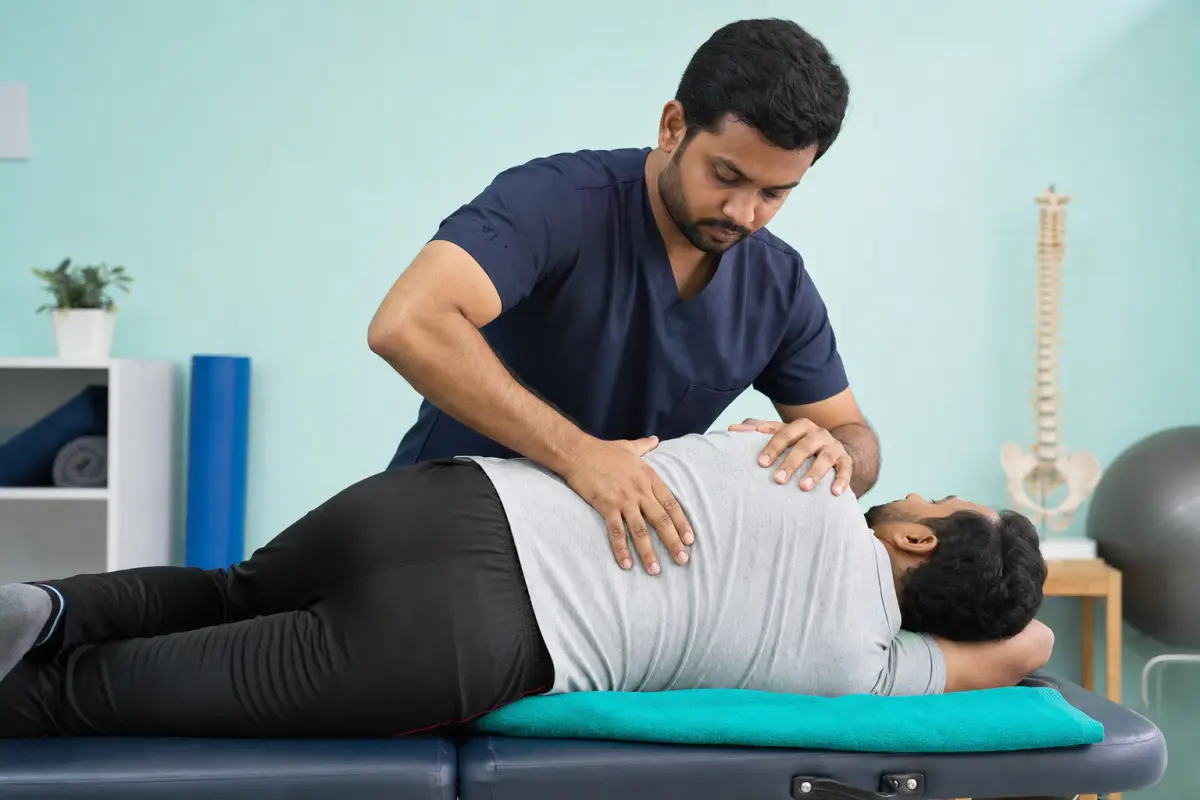
Monday stiffness that eases by Wednesday. Needing to crack neck or back. Tight traps during code review. Wrist ache only on release Fridays. Eye fatigue by 3 pm. These are warnings, not "normal desk life."
Daily pain by afternoon without full overnight reset. Headaches twice a week. Numb fingers at night. Shoulder pain when reaching overhead. Leg tingling after long cab rides on the Expressway. Sleep disturbed because every pillow feels wrong.
Pain beyond six weeks despite rest weeks. Progressive numbness or weakness. Avoidance of sport or social plans because standing or sitting hurts. Anxiety driven by an old MRI report that does not match daily function.
Progressive arm or leg weakness, dropping objects, foot drag, bowel or bladder changes, fever with spine stiffness, unexplained weight loss, trauma, or night pain that will not settle. These are not desk-stretch problems. Book medical review before physiotherapy loading.
Arjun, 34, runs infrastructure for a SaaS company at Corenthum near Sector 62. His typical day: 8:30 am cab from Sector 126, stand-up on a laptop below eye line, four hours of dual-monitor dashboards, lunch at desk while on Slack, three hours of incident calls with phone cradled on shoulder, then cab home flexed over his phone.
By early 2026 he had neck pain every afternoon, lower back stiffness when standing, and right wrist tingling after on-call weekends. He bought a standing desk but stood with locked knees and the screen still low. Massage helped until Monday stand-up reloaded everything.
A home assessment mapped the full stack: monitor height, mouse reach, cab unload habit, and sleep posture. We staged chin tucks and lumbar resets for desk breaks, wrist neutral drills, and scapular work — not ten exercises at once, but two repeats between incidents. Six weeks later he still had on-call stress — but pain no longer owned his 4 pm block.
Arjun's story is typical: not one injury, but a hidden stack that HR wellness webinars never name individually.
— Dr. Yashika Chaudhary, PT
I do not meet fragile IT professionals in Noida. I meet strong people asked to hold multiple loads — cervical, lumbar, wrist, stress — for nine hours, then commute flexed, then scroll in bed. The hidden health problems are connected. Fix the day design before you chase ten separate supplements or gadgets.
Candor Techspace and Logix Cyber Park are not cursed buildings. They are dense stacks of the same habits. Change load, build capacity, book assessment when self-care plateaus — that is how hidden pain becomes manageable.
Noida IT Park Desk Audit — 12 Points
| Hidden complaint | Common driver | First fix |
|---|---|---|
| Neck pain 3 pm | Low dual monitors | Raise screen; chin tucks |
| Low back groan standing | No lumbar support + long sit | Towel roll; stand breaks |
| Night wrist tingling | Flat keyboard + high mouse | Neutral wrist; lower mouse |
| Shoulder ache overhead | Mouse too far; low armrests | Pull mouse close; adjust armrests |
| Leg tingling after cab | Commute flexion + desk flexion | Lumbar roll in cab; hip flexor stretch |
| Base-of-skull headache | Forward head + dehydration | Screen height; water hourly |
Before the cab to Candor Techspace or Logix Cyber Park, spend two minutes waking the spine — chin tuck, shoulder rolls, short walk to the lift. A stiff start on the Noida Expressway locks flexion for the whole commute. Unload the bag before you sit — even thirty seconds standing at the cab door helps.
Set a 40-minute sit timer at Stellar IT Park or Express Trade Tower. Stand, refill water, reset screen height after the first stand-up block. Your neck, back, and wrist load is cumulative; micro-breaks are medicine, not laziness. Swap one internal call for a walking minute if policy allows.
Eat away from the desk when possible. A ten-minute walk around the campus or one stair flight changes hip and spine loading more than another trap stretch at your chair. Sector 62 food courts are crowded — use that walk time deliberately.
This is when Noida IT pain peaks — 3 pm to 5 pm. Eyes, neck, and lower back complain together. Look twenty feet away every twenty minutes. Do ninety seconds of scapular resets between calls. This is when hidden problems become visible if you ignore them.
Commute home via Electronic City Metro or cab with both bag straps. One-shoulder laptop bags are a quiet neck and upper-back irritant five days a week. If you drive, lumbar support or a small roll behind the low back beats slumping over the wheel.
Phone scrolling in bed extends forward-head and wrist flexion. Keep the screen at eye level even for ten minutes of messages, or use voice notes. Sleep with one supportive pillow — not a stack of soft cushions that lose cervical neutral by midnight.
Prevention in Noida IT parks is boring on purpose — repeatable beats heroic. One setup fix, one break rule, one commute unload habit per week until they stick. HR can print workstation audits; you still have to adjust your own chair.
Raise screens before buying gadgets. Unload bags before the metro gate. Keep hybrid days honest: if office chair works, replicate height at home with books or a stand. Team leads can normalise camera-off walking minutes — culture change reduces load more than a single wellness webinar.
Book assessment early when pain crosses two weeks — hidden problems become entrenched patterns after a quarter of coping.

Stop any exercise that increases numbness, dizziness, or sharp pain. These are starting doses for multiple areas — your physiotherapist will adjust irritability and prioritise the dominant complaint first.
**Purpose:** Reduce forward-head load driving neck pain and cervicogenic headache.
**How to do it:** Sit tall. Gently draw chin straight back without looking down. Hold, release.
**Reps / hold:** 8–10 reps, 3 sec hold
**Common mistakes:** Looking down while tucking; forcing hard
**Who should avoid or modify:** Acute whiplash or dizziness — modify with physio
**Purpose:** Wake deep core and reduce lumbar flexion dominance after long sits.
**How to do it:** Seated or lying. Flatten low back gently by tilting pelvis — small range.
**Reps / hold:** 10 reps, 3 sec hold
**Common mistakes:** Holding breath; excessive arching
**Who should avoid or modify:** Acute disc irritability — gentler range with physio
**Purpose:** Mobilise thoracic and lumbar spine between desk blocks.
**How to do it:** On hands and knees. Slow arch and round through mid-back — small amplitude.
**Reps / hold:** 8–10 slow cycles
**Common mistakes:** Cranking neck; rushing
**Who should avoid or modify:** Wrist pain — modify on chair with seated flexion-extension
**Purpose:** Ease forearm tightness from keyboard and mouse load.
**How to do it:** Arm extended, palm up. Gently pull fingers back with other hand.
**Reps / hold:** 20–30 sec each side, 2 rounds
**Common mistakes:** Shaking or bouncing; stretching into tingling
**Who should avoid or modify:** Acute carpal tunnel flare — very gentle dose
**Purpose:** Rebuild mid-back support so neck and shoulders stop overworking.
**How to do it:** Squeeze shoulder blades down and together without hiking shoulders.
**Reps / hold:** 10 reps, 5 sec hold
**Common mistakes:** Over-arching lower back
**Who should avoid or modify:** Acute shoulder impingement — reduce range
**Purpose:** Counter sit-and-commute flexion loading the lumbar spine.
**How to do it:** Half-kneel. Tuck pelvis. Gentle lunge forward until front hip stretch.
**Reps / hold:** 30 sec each side
**Common mistakes:** Arching low back; forcing deep lunge
**Who should avoid or modify:** Knee pain on floor — pad knee or use standing variant
**Purpose:** Mobilise nerve tissue irritated by wrist and neck posture.
**How to do it:** Arm out to side, palm up. Extend wrist and gently extend head away — then reverse.
**Reps / hold:** 5–8 slow reps each side
**Common mistakes:** Aggressive stretching into numbness
**Who should avoid or modify:** Acute nerve irritation — physio-guided dose only
**Purpose:** Open stiff upper back that forces neck and shoulder compensation.
**How to do it:** Mid-back on chair edge. Hands behind head. Extend over edge in small range.
**Reps / hold:** 8–10 reps
**Common mistakes:** Cranking neck backward
**Who should avoid or modify:** Osteoporosis or acute rib pain — skip
**Purpose:** Pump lower legs after long sit and metro standing — circulation and ankle health.
**How to do it:** Hold desk lightly. Rise on toes, lower slowly.
**Reps / hold:** 15 reps
**Common mistakes:** Rushing; locking knees
**Who should avoid or modify:** Acute Achilles pain — defer loading
**Purpose:** Lower guarded muscle tone amplified by sprint stress.
**How to do it:** Inhale 4 sec, hold 4, exhale 4, hold 4 — repeat.
**Reps / hold:** 4 cycles between meetings
**Common mistakes:** Hyperventilating; doing only when pain screams
**Who should avoid or modify:** None for healthy adults — reduce hold if dizzy
First session maps irritability across neck, back, shoulder, wrist, and nerve patterns — plus the tasks that reload pain: monitor height at Candor Techspace, cab flexion, sofa WFH. We screen red flags before loading. See our Noida location page for coverage areas.
Hands-on care may include soft-tissue release, joint mobilisation, or dry needling when appropriate — matched to irritability, not as a forever crutch. A tight trap may need release so chin tucks work; a stiff thoracic spine may need mobilisation before shoulder loading.
Heat, ice, TENS, or ultrasound can support comfort in acute phases. They do not replace movement and strength; we use them to help you enter exercise sooner when pain is guarding.
Graded mobility, scapular control, core endurance, and nerve glides matched to your Noida workday — not a generic gym PDF. You leave with two or three repeats for between meetings, prioritised by dominant complaint.
Mild mechanical patterns may shift within two to four weeks of consistent habits plus sessions. Multi-region stacks need staged loading over six to twelve weeks. We set review points — not miracle promises. Hidden problems become visible early; treating them early is cheaper than six months of coping.

Home visits remove the friction of a post-7 pm clinic hop down the Noida Expressway. We assess your actual chair, mattress, laptop stack, and commute unload — not an ideal desk in a brochure.
Book via home-session-199 or metro-home-199. Name Sector 62, 63, 125, 126, 132, or your society so arrival windows stay honest.
Our Noida location page covers IT corridors from Logix Cyber Park to Stellar IT Park and Express Trade Tower. First session is ₹499 — assessment-led, not a sales pitch. For back-dominant patterns, see also home physiotherapy for back pain in Noida — this pillar covers the full hidden stack.
Seek urgent medical review for progressive arm or leg weakness, bowel or bladder changes, unexplained weight loss, fever with spine pain, trauma, or night pain that will not settle.
The NHS back pain guidance and MedlinePlus back pain overview align with what we screen on home visits — mechanical care helps many patterns, but red flags need a doctor first.
Meera, 32, shipped features for a B2B platform at Logix Cyber Park near Sector 62. Her hidden stack: neck pain from dual monitors, low back ache when standing after stand-ups, and left wrist tingling after documentation sprints. She treated each with separate YouTube playlists — none stuck.
Home assessment found monitors 10 cm too low, no lumbar support on a "premium" unadjusted chair, mouse on the far corner of an L-desk, and hybrid WFH on a bed desk in Sector 125 society.
Plan staged over four weeks: setup fixes day one; chin tucks and pelvic tilts for desk breaks; wrist neutral drills; two follow-up home sessions. She reported neck and back pain down roughly fifty percent by week four; wrist tingling resolved after mouse reposition and nerve glide dosing.
Meera still has release stress — but the hidden stack is visible and manageable. She books tune-ups before major launches.
| Region | Hidden early sign | Setup fix | When to book physio |
|---|---|---|---|
| Neck | 3 pm trap tightness | Raise monitors | Pain beyond 2 weeks |
| Back | Groan standing from chair | Lumbar roll + breaks | Leg symptoms appear |
| Wrist | Night finger tingling | Neutral keyboard/mouse | Numbness persists |
| Shoulder | Reach overhead ache | Mouse close; armrests | Sleep pain on side |
| Sciatica-type | Calf tingle after cab | Commute lumbar support | Weakness or bladder signs |
| Headache | Skull-base pain | Screen height + hydration | Daily headaches 4+ weeks |
| Knee | Stairs ache | Movement snacks; weight care | Swelling or locking |
| Eyes/posture | Forward lean to read | Font size + eye test | Neck pain despite setup fix |
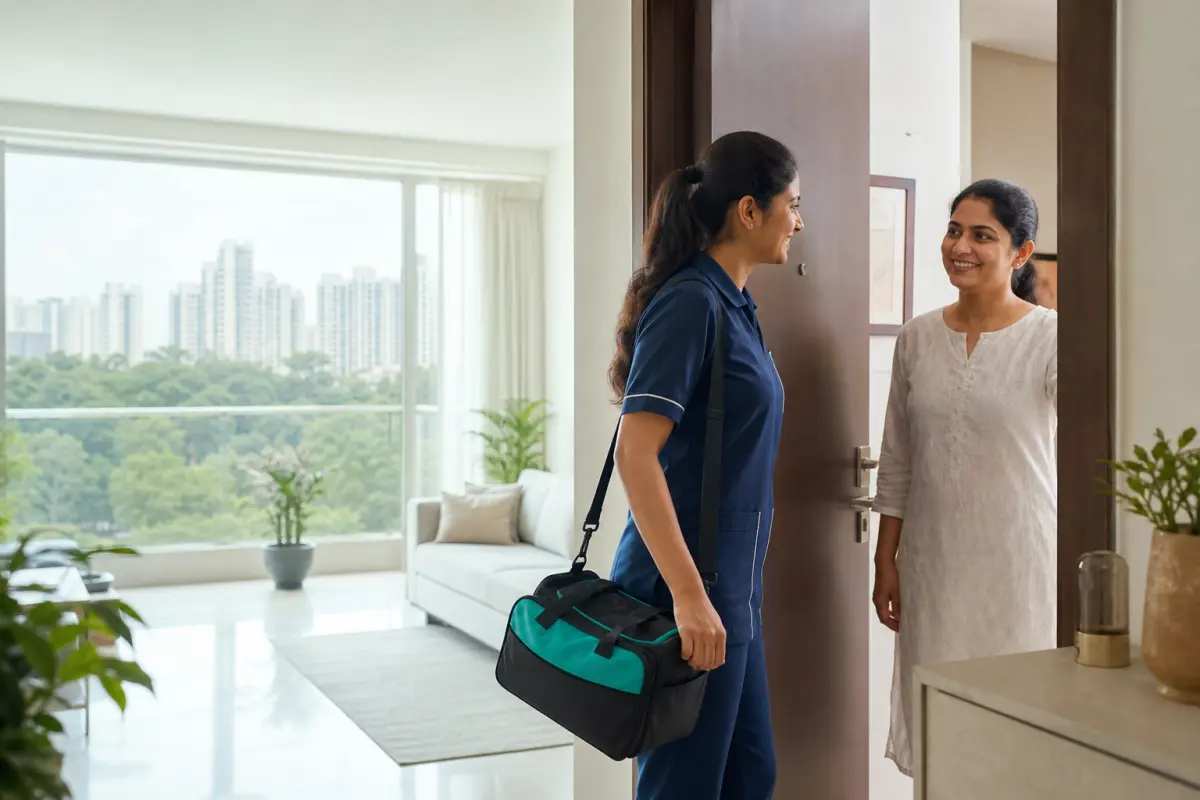
Imagine a vertical tower diagram: base layer "9-hour sit block" → middle layers "commute flexion," "hybrid sofa," "release stress" → top symptoms "neck," "back," "wrist," "headache" as icons. Each layer lists one fix. HR teams at Candor Techspace and Stellar IT Park can print this for workstation audits and onboarding packs.
Side column: Electronic City Metro bag carry, AC dehydration, eye strain loop. Bottom CTA: Book assessment at ₹499 before the stack collapses into a leave request.
The hidden health problems of Noida IT park employees are not random — they are predictable stacks of sit time, commute flexion, hybrid exceptions, and stress. Neck, back, wrist, shoulder, sciatica-type leg symptoms, headache, knee load, eye-posture loops, and stress amplification connect through the same workday design.
Change the load, build capacity region by region, and book assessment when self-care plateaus. Mechanical patterns respond to setup, breaks, and graded loading when red flags are ruled out.
**Book Home Physiotherapy in Noida at ₹499** — assessment-led first home session for Sector 62, 63, 125, 126, 132 and IT park professionals. Open metro-home-199.html, select Noida, and name your locality.
Patterns cluster wherever sit time and monitor density are highest — Candor Techspace, Logix Cyber Park, Stellar IT Park, Corenthum. The building matters less than the day design.
Most mechanical patterns improve with load change and graded rehab. Red flags need medical review first — not all pain is desk-related.
Assessment prioritises irritability and daily drivers. Often setup fixes help both because forward-head and lumbar flexion share the same chair.
It helps when recommendations are implemented. Many chairs stay unadjusted after audit. Home physio catches hybrid-day gaps HR never sees.
That article focuses on back-dominant desk patterns. This pillar maps the full hidden stack across body regions common in IT parks.
Assessment-led home visit — multi-region screening, setup review, starter plan. Follow-up frequency explained after we see your pattern.
Usually yes. We modify setup and dose rather than asking you to disappear from sprint work.
Progressive weakness, trauma, fever with stiffness, bowel or bladder changes, unexplained weight loss — medical first.
Often. Mouse reach and forward-head load share desk geometry. Fixing only wrists while monitors stay low often fails.
Indirectly. Uncorrected vision drives forward lean, which reloads neck and upper back. Update prescription plus screen setup together.
Home physiotherapy
₹1200 First session ₹599
Book ₹599 home physiotherapy (metro cities) →
Clinic Google Map on Contact page →
Assessment-led first home session for Sector 62, 63, 125 and IT park professionals. Book via metro-home-199.html — select Noida and add your locality.
5
33 Google reviews
Patient reviews
Real Google reviews for Quick Physio Physiotherapy & Rehabilitation Center — 5★ from 33 patients.
I had a wonderful experience at this therapy centre. The therapists are highly professional, compassionate, and genuinely dedicated to helping their clients. The environment is clean, welcoming, and comfortable, makin…
I had a very good experience at QuickPhysio Clinic. The physiotherapists are highly skilled, professional, and take time to understand the patient’s condition properly. The treatment was effective, and I noticed signi…
Great experience overall. The staff was polite and supportive, and the treatment sessions were handled with care and attention. The exercises and guidance provided were easy to follow and really helped with recovery.
I had been suffering from slip disc and cervical pain for quite some time, and after taking physiotherapy sessions at this center, I experienced significant relief. The therapists are highly skilled, professional, and…
Excellent work by doctor. Having a great experience till 5 day.
Assessment-led care at home across Ghaziabad & Delhi NCR — first home session ₹499.
Browse locations Contact & map